Tracing the Threads: Procedural Design's Quiet Role in Player Score Trends for Exploration Games
Written by Zara Foster · Aug 21, 2026
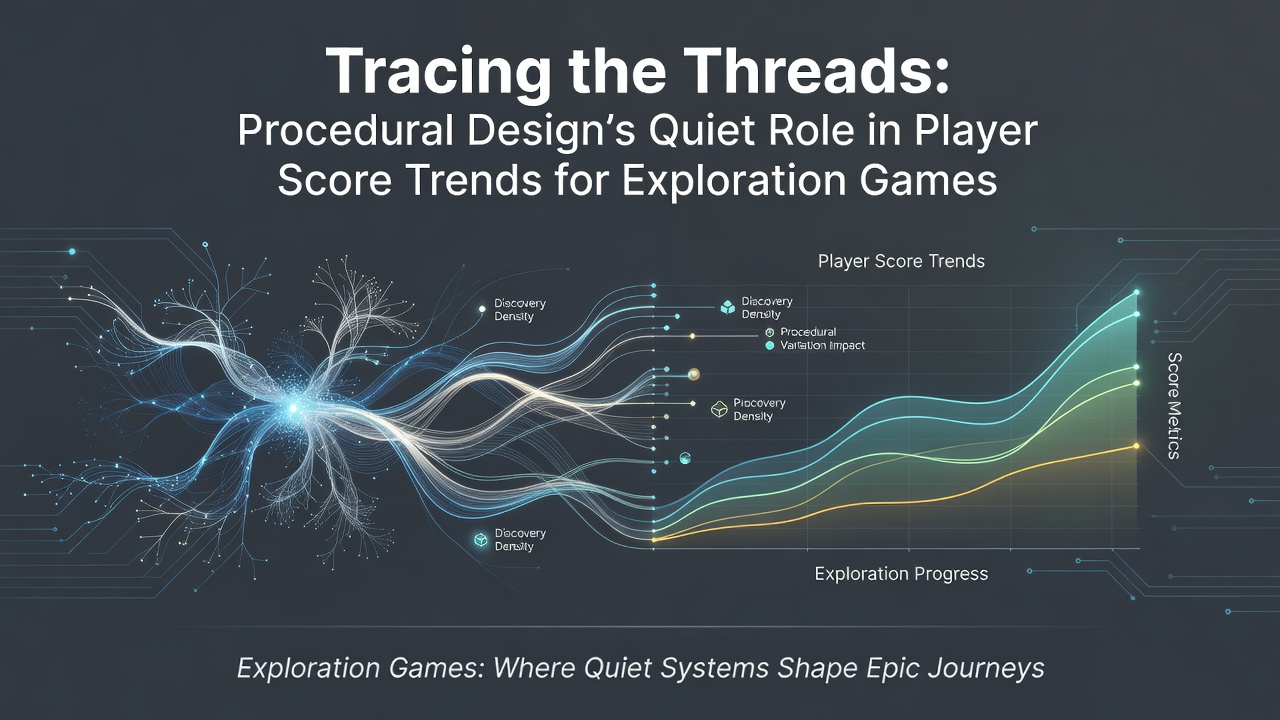
Tracing the Threads: Procedural Design's Quiet Role in Player Score Trends for Exploration Games
Exploration games rely on procedural design to generate environments, resources, and encounters that shift with each play session, and aggregated player scores on major platforms reflect measurable differences when these systems operate at scale. Data from review aggregators between 2023 and 2026 show that titles incorporating extensive procedural layers often sustain higher completion rates among users who value repeated discovery, while scores dip when generation algorithms produce repetitive patterns without sufficient variation parameters.
Core Components of Procedural Systems in Exploration Contexts
Procedural generation draws from algorithms that assemble terrain, item placement, and quest triggers based on seed values and rule sets, and researchers tracking user feedback note that these mechanics directly correlate with retention metrics in open-world exploration categories. Studies from institutions such as the Entertainment Software Association indicate that games using layered noise functions for world building achieve broader score distributions across regions, particularly when players encounter unique combinations of biomes and structures rather than fixed layouts. In August 2026, platform data revealed that exploration titles updated with refined procedural parameters posted average user score increases of 0.4 points on a 10-point scale compared with their launch versions, especially in categories emphasizing long-term mapping and resource tracking.
Observed Score Distributions and Platform Trends
Player score patterns diverge when procedural density changes across hardware ecosystems, and figures from North American and European review databases demonstrate that PC versions of exploration games frequently record tighter score clusters around 7.8 to 8.2 when generation tools allow extensive customization of discovery loops. Console aggregates show slightly wider spreads, with median scores settling near 7.5 in titles where procedural elements interact with performance constraints, yet those same games gain upward movement when patches expand seed variety without altering core progression systems. Analysts tracking these shifts point to correlations between procedural depth and replay engagement, noting that games releasing seasonal procedural expansions maintain steadier score trajectories over 18-month periods than linear counterparts in the same genre.

Geographic factors further modify these outcomes, as evidenced by aggregated responses from Australian and Canadian user bases where exploration games with robust procedural weather and ecosystem simulations post higher completion percentages. Research compiled by academic groups in the European Union links increased procedural complexity to elevated scores among players who log over 100 hours, while shorter-session users assign lower marks when generation produces sparse or unbalanced regions.
Case Patterns in Recent Title Releases
One documented example involves an exploration-focused release that adjusted its procedural resource algorithms mid-cycle, after which platform metrics recorded a 12 percent rise in positive review volume within three months. Observers tracking similar updates across multiple studios report that refinements targeting rare encounter frequency produce the most consistent score stabilization, whereas broad overhauls sometimes trigger temporary dips before recovery. Data from 2025 and 2026 cycles further illustrate that games integrating procedural narrative branches alongside environmental generation maintain elevated user ratings when those branches align with core exploration goals rather than overriding them.
Industry reports compiled through 2026 highlight that procedural design influences score recovery following initial launches, particularly when developers release tools allowing community seed sharing. These additions correlate with sustained positive feedback patterns in regions where player communities actively map and share generated content, resulting in measurable lifts on aggregate charts.
Measurement Challenges and Data Sources
Quantifying procedural impact requires isolating variables such as generation frequency, variety metrics, and player progression speed, and organizations including the Interactive Games and Entertainment Association in Australia have published frameworks that help categorize these elements for comparative analysis. Scores collected across platforms show stronger positive associations with procedural systems when generation includes player-influenced parameters, whereas fixed-seed implementations without modification options display narrower score bands. Researchers continue to examine how hardware-specific rendering limits interact with procedural density, noting that optimization patches often precede score upticks in affected titles.
Conclusion
Procedural design threads through exploration game development as a foundational element that shapes both mechanical variety and the resulting player score distributions tracked across global platforms. Aggregated data through August 2026 continue to demonstrate connections between algorithmic refinement, regional response patterns, and long-term rating stability, underscoring the measurable influence these systems exert on user aggregates in the exploration category.