The Influence of Early Access Periods on Final Product Reception in Crowdsourced Review Systems
Written by Felix Schmid · May 17, 2026
The Influence of Early Access Periods on Final Product Reception in Crowdsourced Review Systems
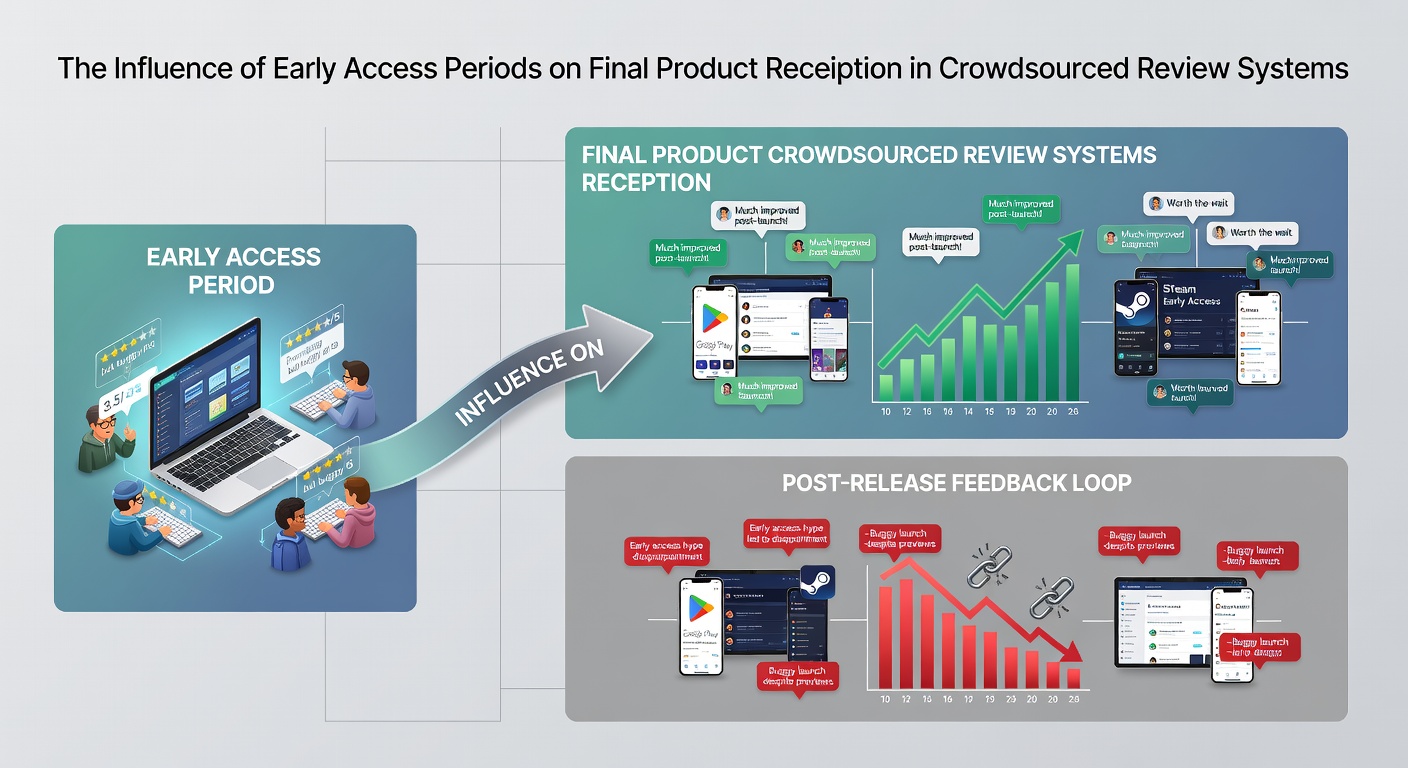
Early access periods have become a standard pathway for many titles on platforms that rely on user-driven ratings, allowing developers to gather input while a product remains in active refinement, and observers note that these phases often shape how final versions perform once crowdsourced scores stabilize. Data from major distribution services indicate that games spending extended time in early access frequently record measurable shifts in aggregate user evaluations between the preview stage and the complete release.
Mechanics Behind Early Access and Review Aggregation
Platforms such as Steam integrate early access as a distinct visibility tier where participants can purchase and rate products that carry explicit disclaimers about incompleteness, yet the same review systems continue to compile scores without separating pre-release and post-release inputs in many public displays. Researchers tracking these patterns have documented that initial feedback tends to focus on core mechanics and potential, while later ratings emphasize polish, content volume, and technical stability once full launches occur.
Because review weights accumulate across both phases in most crowdsourced interfaces, developers gain opportunities to address recurring complaints before the final version reaches wider audiences, and this iterative loop contributes to the statistical differences recorded in post-launch aggregates. Studies covering releases between 2023 and 2025 show that titles remaining in early access for at least six months experienced an average user score adjustment of plus four to seven points on standardized 100-point scales when compared with their early access baselines.
Observed Score Patterns Across Multiple Platforms
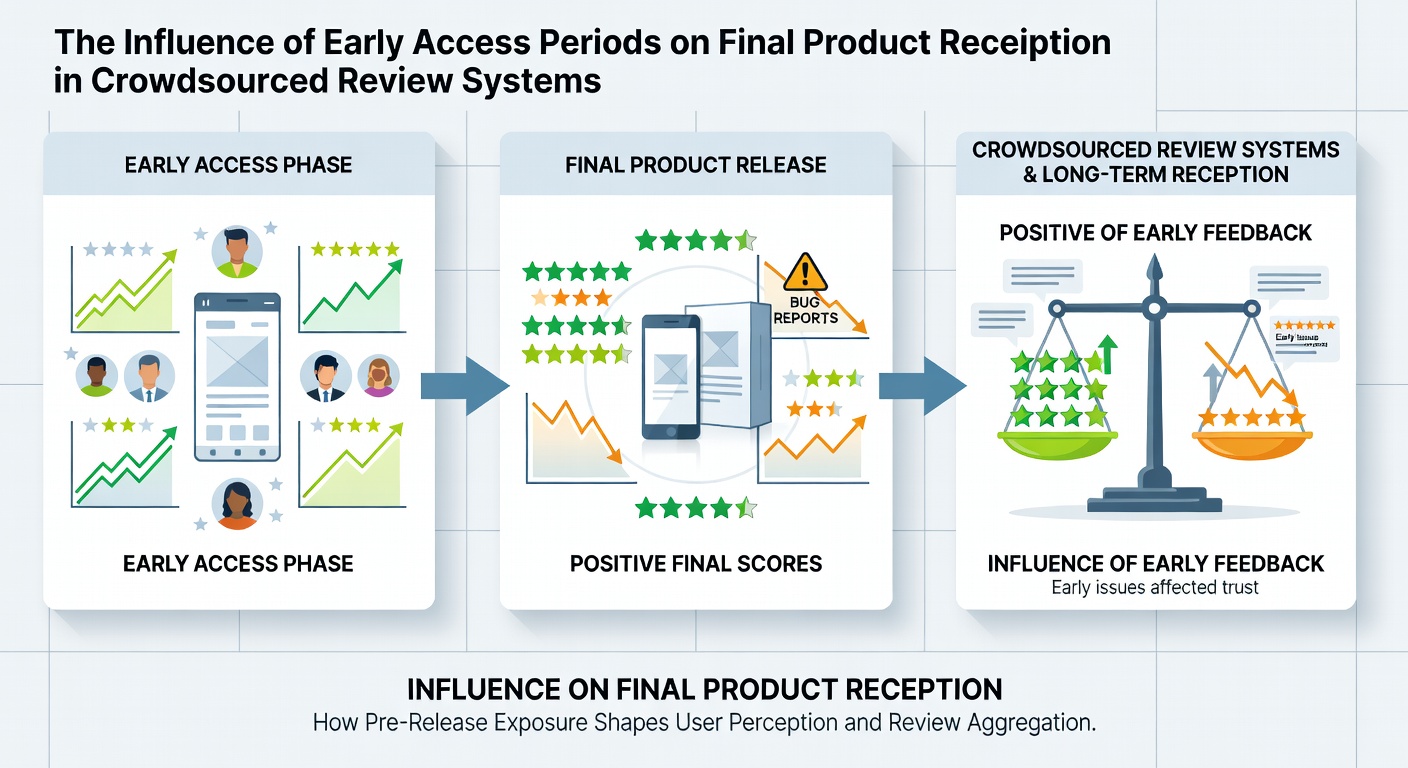
Analysis of publicly available review datasets reveals consistent trends where early access participants rate titles more leniently during the preview window, yet the same cohorts often deliver higher marks after updates incorporate their suggestions, creating an overall upward trajectory in final aggregates. Conversely, products that fail to resolve prominent issues identified during early access periods show either flat or declining scores once the complete edition arrives, highlighting how reception hinges on execution rather than the early access model itself.
According to reports compiled by the Entertainment Software Association, early access participation rates grew steadily through 2025, with over 35 percent of indie and mid-tier releases on major PC storefronts utilizing the format in some capacity. These figures align with observations from European trade groups that track similar adoption curves across regional markets.
Factors That Moderate Reception Outcomes
Communication frequency emerges as a significant variable in how final products land with reviewers, because regular progress updates during early access build expectations that developers must then meet or exceed at launch. Titles maintaining transparent roadmaps and responding directly to community threads tend to retain positive momentum, whereas infrequent updates correlate with sharper drops once players compare delivered content against earlier promises.
Genre also plays a documented role, with simulation and strategy games showing stronger score gains after early access compared with narrative-driven experiences that rely on complete storytelling arcs from the outset. Platform algorithms further influence visibility, as higher early access engagement can trigger broader recommendation placements that carry forward into the full release window and affect sample sizes for later ratings.
Regional and Temporal Variations Through Early 2026
By May 2026, industry tracking services had noted an increase in hybrid early access models that incorporate limited console testing alongside PC previews, creating additional data points for developers before wider distribution. These expanded programs coincide with refined review presentation tools on storefronts that now allow users to filter scores by participation date, although aggregate displays still combine all inputs by default in most interfaces.
Cross-platform studies indicate that games originating on PC early access and later appearing on consoles often carry forward adjusted expectations, resulting in score continuity rather than dramatic resets when the same user base migrates across devices. Research published through academic channels continues to examine these migration effects using large-scale review corpora collected from multiple storefront APIs.
Conclusion
The relationship between early access duration and final crowdsourced reception rests on measurable patterns of feedback integration, expectation management, and execution quality rather than any inherent advantage or disadvantage of the model itself. Aggregated data through mid-2026 demonstrate that successful navigation of these periods can produce statistically higher user scores, while shortcomings in addressing identified issues during development frequently lead to neutral or negative shifts once full releases occur. Continued monitoring of review distributions across evolving platform features will provide further clarity on how these dynamics evolve alongside changing consumer behaviors and distribution strategies.