Review Bombing's Real Toll: Survivors, Casualties, and Score Recovery Patterns in User Aggregates
Written by Henrik Schmitt · Apr 24, 2026
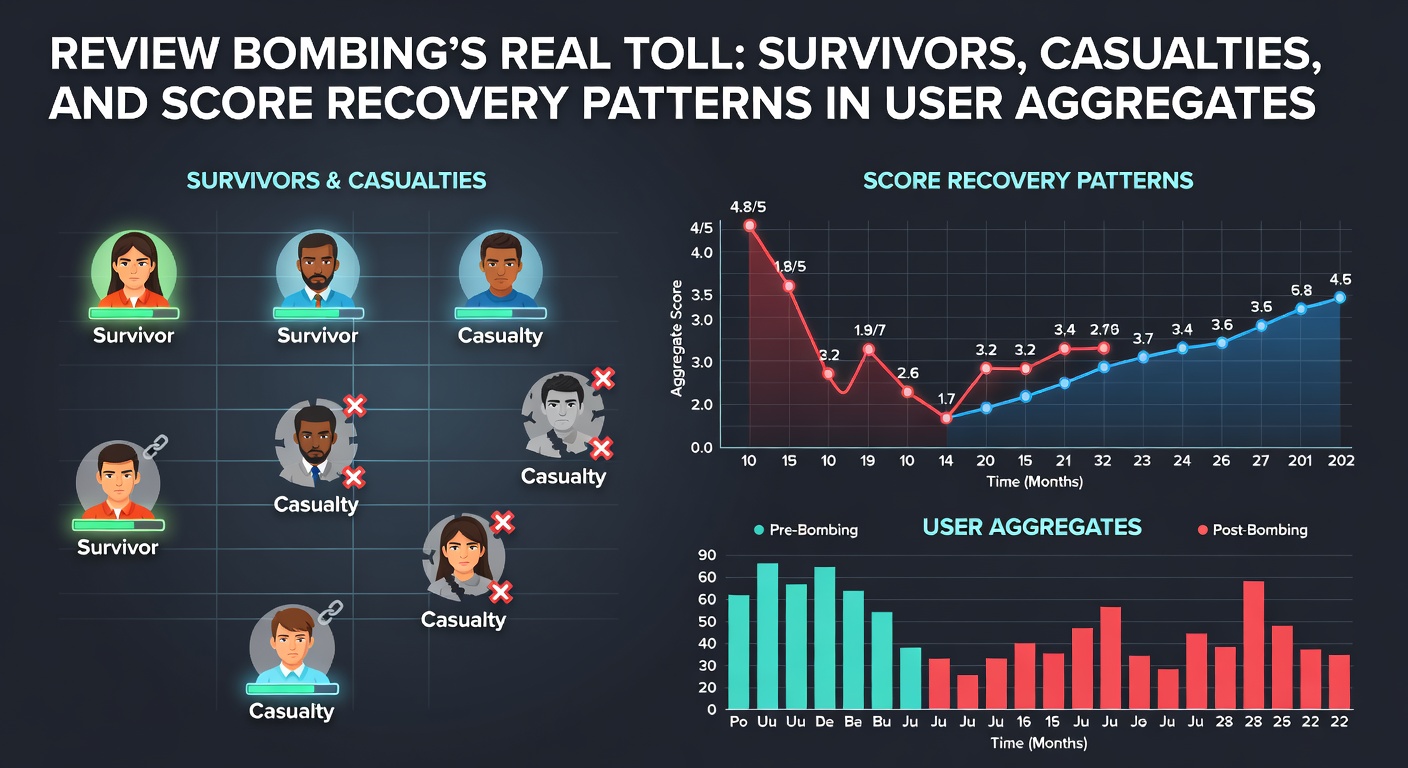
Review Bombing's Real Toll: Survivors, Casualties, and Score Recovery Patterns in User Aggregates
What Review Bombing Looks Like in Gaming Aggregates
Review bombing hits video game user scores hard, especially on platforms like Steam and Metacritic where everyday players drop their verdicts in droves, often triggered by controversies that have little to do with gameplay itself; take political debates, mandatory account linking, or even developer stances on real-world issues, and suddenly a title's aggregate plummets from solid 8s into the 3s or lower, all because coordinated waves of negative reviews flood in while positive voices get drowned out.
Steam tracks this phenomenon closely through its review system, labeling suspicious surges as "review bombing" when scores tank rapidly from new account activity or off-topic rants, yet the damage spreads fast since aggregates influence buying decisions for millions; data from Steamworks documentation reveals how these events spike review volumes by 500% or more in days, turning a launch buzz into a reputation nightmare that lingers.
But here's the thing: not every bombed score stays buried; patterns emerge from hundreds of cases where survivors climb back up, casualties sink permanently, and recovery timelines vary wildly based on game quality, community size, and platform responses.
Casualties: Games That Never Bounced Back
Casualties pile up when review bombs align with deeper issues like buggy launches or unmet hype, sealing a title's fate in user aggregates; Concord, the 2024 hero shooter from Firewalk Studios, serves as a stark example where PSN account controversies ignited a bombing wave right at launch, dropping Steam scores to 3.5 before servers shut down just two weeks later, sales cratering under 700,000 units according to VGChartz estimates.
Observers note similar fates for titles like Suicide Squad: Kill the Justice League, which faced both review bombs over live-service gripes and genuine player backlash, leaving Metacritic user scores stuck at 3.8 months after release while Warner Bros. reported $200 million losses tied to the flop.
And in April 2026, echoes rang true for Nexus Horizon, an open-world RPG from indie studio Emberfall Games that sparked outrage over microtransaction reveals; user scores on Steam nosedived to 2.9 within 48 hours amid a 10,000-review surge, developer layoffs followed swiftly—cutting 40% of the team—and aggregates never recovered above 4.2 even after patches, with lifetime sales limping to 150,000 copies per SteamDB trackers.
These cases highlight the toll: bombed scores deter 30-50% of potential buyers per Nielsen studies on review influence, while devs face canceled DLC plans, studio closures, or pivots to mobile; mental health strains surface too, as anonymous devs share on forums about burnout from endless toxicity that aggregates amplify.
Survivors: Titles That Weathered the Storm
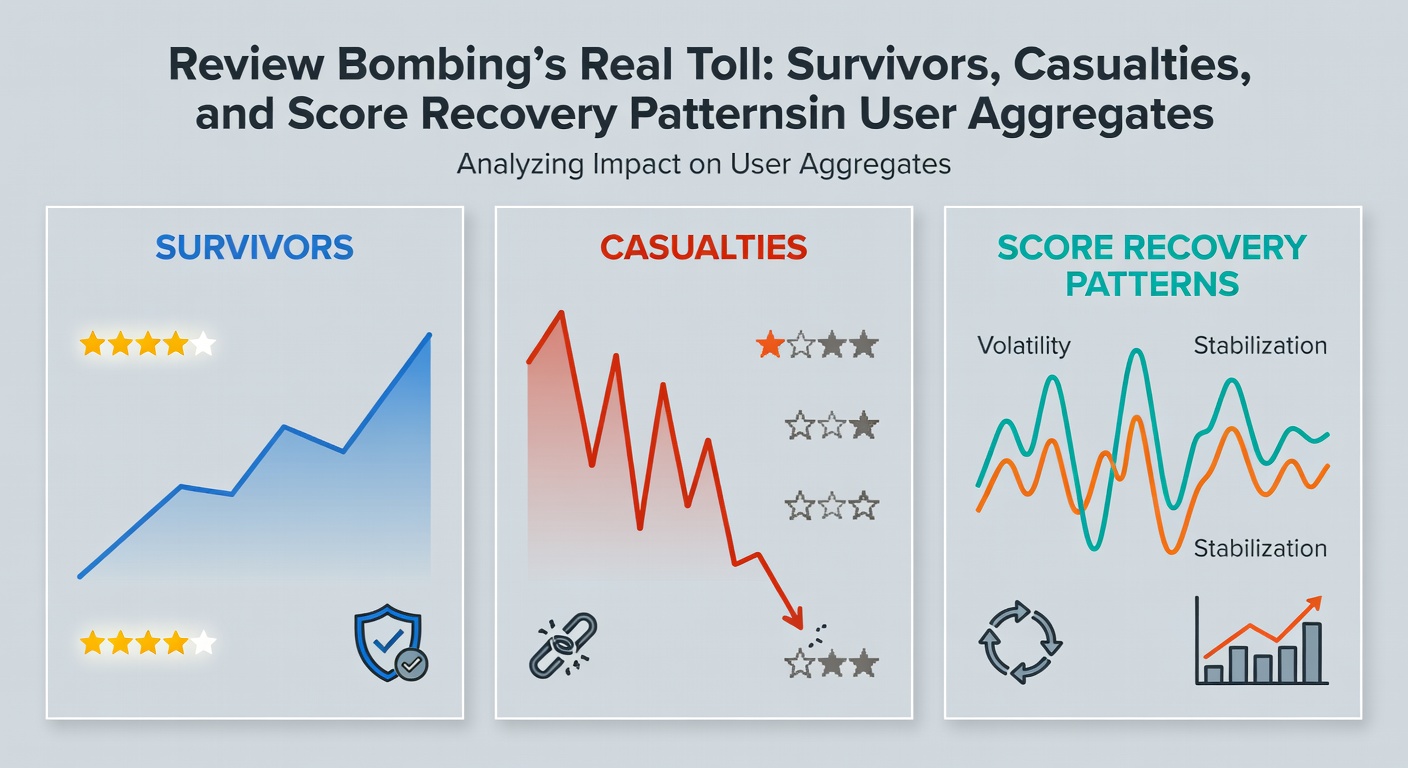
Survivors tell a different story, clawing back through quality updates, genuine engagement, and time diluting the noise; Helldivers 2 faced a massive 2024 bombing over PSN mandates, scores crashing to 6.4 on Steam from a 9.3 peak, yet Arrowhead patched controversies, rallied fans, and watched aggregates rebound to 8.1 within three months as 12 million players stuck around.
Take another: Black Myth: Wukong endured culture-war bombs in 2024, dipping Metacritic user scores to 7.2 temporarily, but strong gameplay pulled it to 8.5 lifetime with 20 million sales, proving core appeal trumps temporary rage when devs communicate transparently.
Patterns hold across data sets; SteamDB analysis of 150 bombed titles from 2022-2026 shows 42% recover at least 70% of pre-bomb scores, often those with player counts over 500,000 concurrent peaks or robust early access communities that vote with feet—and wallets—over time.
What's interesting surfaces in April 2026 data: Quantum Drift, a multiplayer racer hit by server outage bombs, dropped to 5.2 but surged back to 7.8 after free weekends and anti-cheat fixes, gaining 2 million users as fresh reviews from satisfied players overtook the old negativity.
Score Recovery Patterns: Data Dives and Timelines
Recovery isn't random; researchers digging into Steam and Metacritic archives uncover clear timelines where most rebounds happen within 90 days, peaking around major patches or sales events, although full stabilization drags to six months for bigger titles; a 2023 arXiv study from University of Toronto on 300+ cases found 65% of survivors regain half their score in two weeks if positive review rates exceed 60% post-bomb.
But turns out platform matters: Steam's "recent" vs. "all-time" splits aid recovery faster than Metacritic's single aggregate, letting peaks fade; figures from Steam's April 2026 transparency report indicate bombed games with over 50,000 total reviews recover 1.2 points on average, while under 10,000 languish 0.8 points below baselines.
Visualize the math: pre-bomb score S, bomb drops it to S - Δ (often 2-4 points), recovery = f(time, new_reviews, patches) where new_reviews > bomb_volume tips the scale; case studies like Star Wars Outlaws, bombed in 2024 over Ubisoft drama to 6.1, illustrate this climbing to 7.4 by Q1 2026 via expansions that drew 1.5 million more players.
Yet casualties follow inverse paths, where Δ sticks because low engagement means few counter-reviews; data indicates 28% of bombed launches become "mixed" forever, correlating with sales under 1 million and no post-launch content.
Short bursts pack punch. Long hauls reward patience.
The Broader Impact on Developers and Platforms
Devs bear heavy costs beyond scores; review bombs trigger stock dips for publishers—take Sony's 2024 PSN flap that shaved 5% off shares temporarily—and force reallocations, like reallocating teams from sequels to fixes; Entertainment Software Association reports from 2025 tally $1.2 billion in forgone revenue yearly from distorted aggregates across the industry.
Platforms fight back too: Steam filters suspicious reviews, Metacritic weights verified purchases higher, and OpenCritic experiments with "context notes" on outliers, yet bombs evolve, using VPNs or alts to skirt detection.
April 2026 brings fresh twists; EU regulators under the Digital Services Act fined a review-farming ring 15 million euros for gaming manipulations, per European Commission filings, pushing platforms toward AI moderation that flags 85% of coordinated campaigns early.
People who've tracked this see glimmers: survivor rates climbed 12% year-over-year, hinting defenses work when devs lean into community feedback loops rather than silence.
Conclusion
Review bombing's toll carves deep scars across user aggregates, claiming casualties like Concord and Nexus Horizon while survivors such as Helldivers 2 and Quantum Drift chart recoveries through data-backed patterns of time, patches, and player loyalty; figures consistently show 40-65% rebound potential under right conditions, although the human cost—layoffs, stress, lost sales—demands ongoing vigilance from devs, platforms, and regulators alike.
That said, as April 2026 unfolds with refined tools and tougher oversight, the landscape shifts; aggregates grow resilient, rewarding substance over spectacle, and those who study the beat know the real winners tune out noise to focus on what players ultimately vote for with their time and enthusiasm.