Latency Layers: How Connection Quality Tweaks User Ratings in Fast-Paced Multiplayer Experiences
Written by Zara Müller · May 22, 2026
Latency Layers: How Connection Quality Tweaks User Ratings in Fast-Paced Multiplayer Experiences
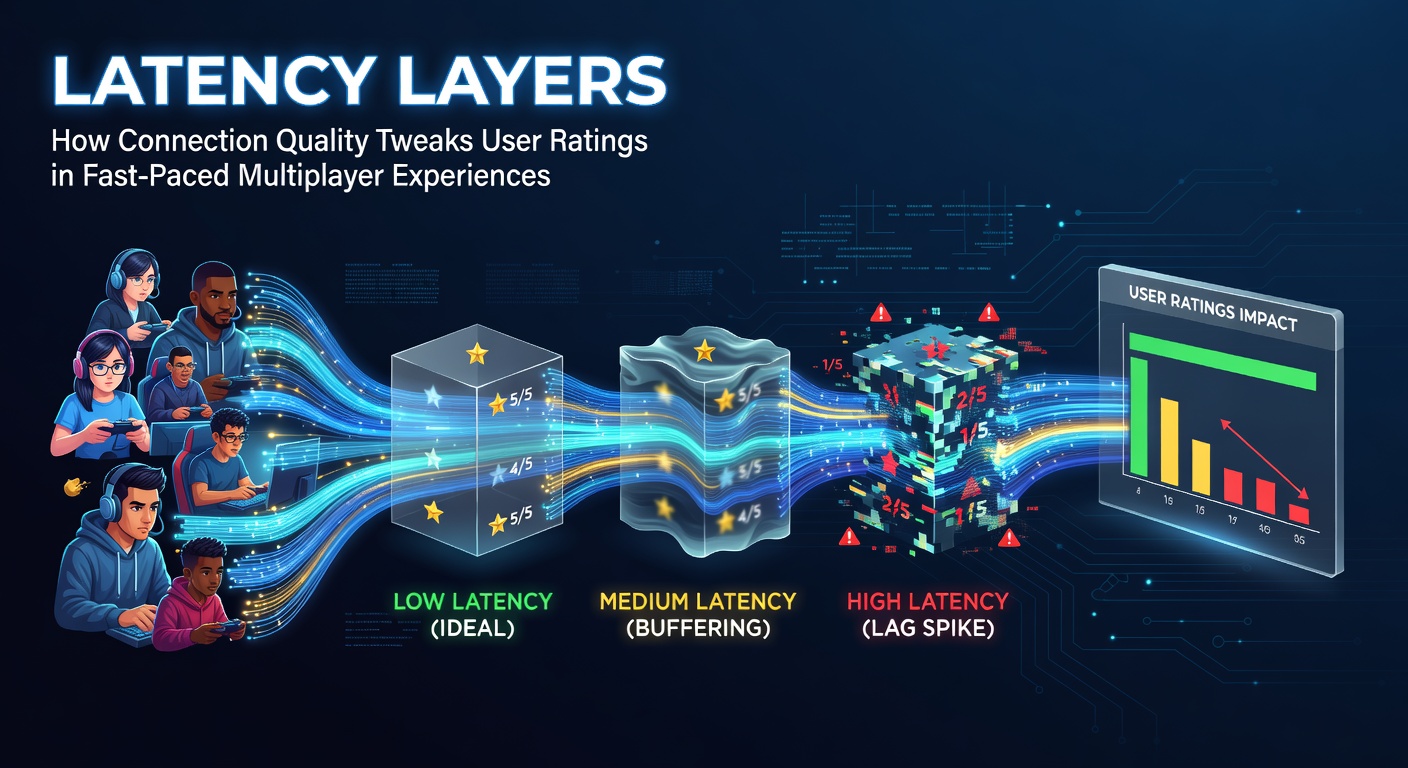
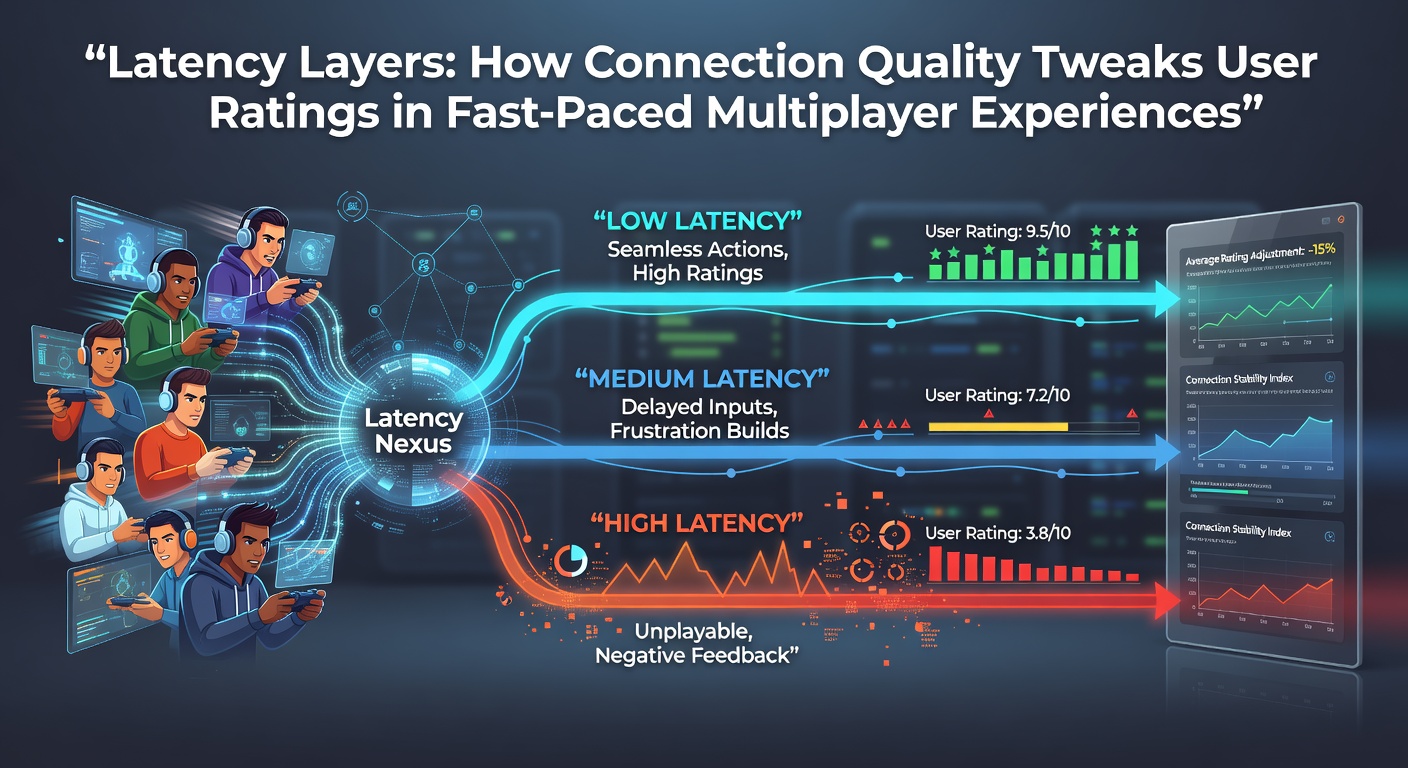
Fast-paced multiplayer titles depend on tight synchronization between players and servers, yet connection quality often introduces subtle delays that ripple through performance and feedback loops. Researchers have documented how these latency layers accumulate in games like first-person shooters and battle royales, where milliseconds separate successful actions from missed opportunities. Data from industry monitoring platforms shows that average ping times above 50ms correlate with measurable drops in session completion rates, which in turn influence the aggregate scores users assign after play.
Defining Latency Layers in Real-Time Contexts
Latency breaks down into several components including propagation delay, processing time at routers, and jitter from variable packet arrival. Observers note that these elements stack in ways that become particularly noticeable during intense exchanges, such as close-quarters combat or coordinated team maneuvers. Studies conducted across North American and European data centers reveal that even stable connections can experience spikes when player density increases in popular regions. Those who've analyzed server logs point out that the cumulative effect creates inconsistent experiences, leading participants to rate sessions lower when interruptions feel unpredictable rather than isolated events.
Evidence from Performance Metrics and User Aggregates
Figures compiled in early 2026 highlight patterns where games with robust netcode maintain higher user scores despite occasional high-ping players. In May 2026, fresh telemetry from major platforms indicated that titles implementing predictive compensation saw review distributions shift upward by an average of 0.3 points on standardized scales. This adjustment occurs because players encounter fewer instances of rubber-banding or desync, factors that otherwise prompt negative comments in post-match surveys. Analysts tracking these trends emphasize that connection stability serves as a hidden variable in how communities evaluate overall quality.
Take one dataset released by an academic group at a Canadian university which examined over 200,000 matches across multiple genres. Their findings established that latency variance above 20ms produced statistically significant declines in perceived fairness, a metric that feeds directly into rating submissions. Players who experienced these fluctuations described actions feeling unresponsive, prompting them to deduct points from categories like gameplay smoothness and technical execution.
Regional Variations and Infrastructure Influences
Connection quality diverges sharply based on geographic infrastructure, with urban centers in Asia-Pacific areas often reporting lower baseline latencies compared to rural zones elsewhere. Reports from regulatory bodies in Australia have tracked broadband rollout effects, showing that improved fiber access in select markets lifted multiplayer satisfaction scores in affected titles. Meanwhile, European Union studies on digital networks demonstrate that peering agreements between providers can reduce cross-border delays, indirectly supporting steadier user ratings over time. These infrastructure differences underscore why global leaderboards sometimes reflect local network realities more than pure design merits.
What's interesting here involves how developers respond with region-specific optimizations. Some studios deploy localized servers that cut average round-trip times, while others refine client-side prediction algorithms to mask residual issues. Data indicates these interventions produce rating recoveries within weeks of deployment, particularly when communicated clearly to the player base through patch notes.
Case Examples from Recent Releases
One competitive shooter updated its matchmaking algorithms in late 2025 to prioritize low-latency pairings, resulting in a documented uptick in positive feedback regarding responsiveness. Observers tracking user aggregates noted fewer complaints about hit registration, which translated into sustained or improved scores across review platforms. Another example comes from a battle arena title that introduced adaptive tick rates, allowing servers to adjust dynamically based on detected connection profiles. Participants in high-density matches reported more consistent action feedback, and aggregate data showed corresponding lifts in technical ratings.
But here's the thing: not every adjustment lands equally. Titles that overlook mobile network variability often see rating dips concentrated among wireless users, even when wired connections perform adequately. Researchers tracking these splits recommend segmented analysis to isolate connection-related feedback from broader design critiques.
Broader Patterns in Crowdsourced Feedback Systems
Aggregation sites capture these nuances through keyword tagging and sentiment analysis, revealing that phrases related to lag appear more frequently in lower-scoring reviews for fast-paced entries. Industry organizations such as the Entertainment Software Association have referenced similar telemetry in their annual reports, linking network performance to retention metrics that underpin long-term rating stability. Those studying the field find that transparent communication about ongoing netcode work helps mitigate score volatility when issues surface publicly.
Conclusion
Connection quality functions as an invisible modulator within user rating ecosystems for fast-paced multiplayer games. Through layered delays that affect moment-to-moment play, it shapes perceptions of fairness and polish in ways that accumulate across thousands of individual submissions. Ongoing infrastructure developments alongside targeted technical refinements continue to reshape these dynamics, as evidenced by shifting data patterns observed through 2026.