How Virtual Economy Mechanics Shape Long-Term Engagement Metrics in Simulation Titles Across Digital Storefronts
Written by Zara Müller · Jul 28, 2026
How Virtual Economy Mechanics Shape Long-Term Engagement Metrics in Simulation Titles Across Digital Storefronts
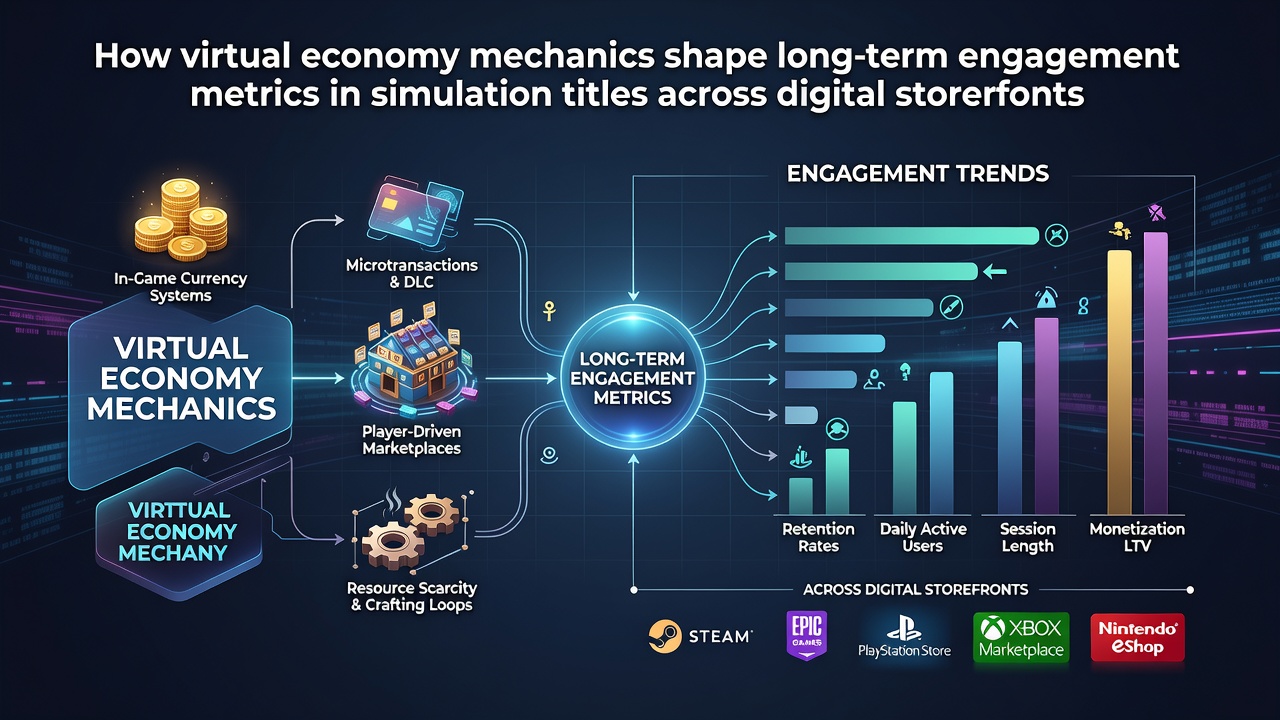
Simulation titles incorporate virtual economy mechanics that track player interactions with resources, currencies, and markets, and these systems connect directly to retention data collected across platforms like Steam, the Epic Games Store, and console digital marketplaces. Observers note that resource scarcity models, player-driven auctions, and progression currencies create feedback loops where daily logins rise when economic goals align with long-term play patterns, whereas titles lacking balanced sinks see quicker drops in session length after initial weeks.
Core Mechanics and Their Data Patterns
Designers implement layered currencies such as soft resources for daily tasks and premium tokens for accelerated upgrades, and studies from industry groups show these layers correlate with extended playtime when conversion rates stay below thresholds that frustrate free players. In titles released through 2025 and into mid-2026, platforms report that games featuring adjustable market volatility maintain higher monthly active user counts compared to rigid systems, because players return to adjust strategies after price shifts or event-driven supply changes. Researchers have tracked how auction house mechanics in farm and life simulators drive repeat visits, since successful trades generate visible progress that reinforces continued participation across storefront leaderboards.
One analysis of persistent simulation worlds revealed that introducing limited-time economic events increased average session duration by measurable margins in the following quarter, while static economies without such events showed steadier but lower engagement curves. Data indicates these patterns hold across regions, with European and North American storefronts displaying similar retention lifts when economies reward consistent resource gathering over one-time purchases.
Platform Differences in Engagement Tracking
Steam and console storefronts aggregate telemetry that links economic depth to completion rates for optional challenges, whereas mobile simulation ports emphasize microtransaction pacing that influences lifetime value metrics without altering core progression speed. Observers have documented cases where cross-platform releases adjust virtual economy parameters per storefront, resulting in varied retention graphs that peak during seasonal updates on one service while holding steady on another. Figures from trade associations demonstrate that simulation games with synchronized economy resets across ecosystems sustain broader user bases through the first year post-launch, because players migrate between devices while maintaining economic progress.
What's interesting is how geographic storefront variations affect these outcomes. A report from the Entertainment Software Association highlights North American simulation titles that tie economy mechanics to community events, and those projects record stronger year-two engagement numbers than counterparts without such integrations. In parallel, data from the Interactive Games and Entertainment Association in Australia points to similar lifts in Asia-Pacific markets when economies incorporate local cultural trading preferences, showing retention stability through July 2026 update cycles.
Long-Term Metrics and Economic Balance
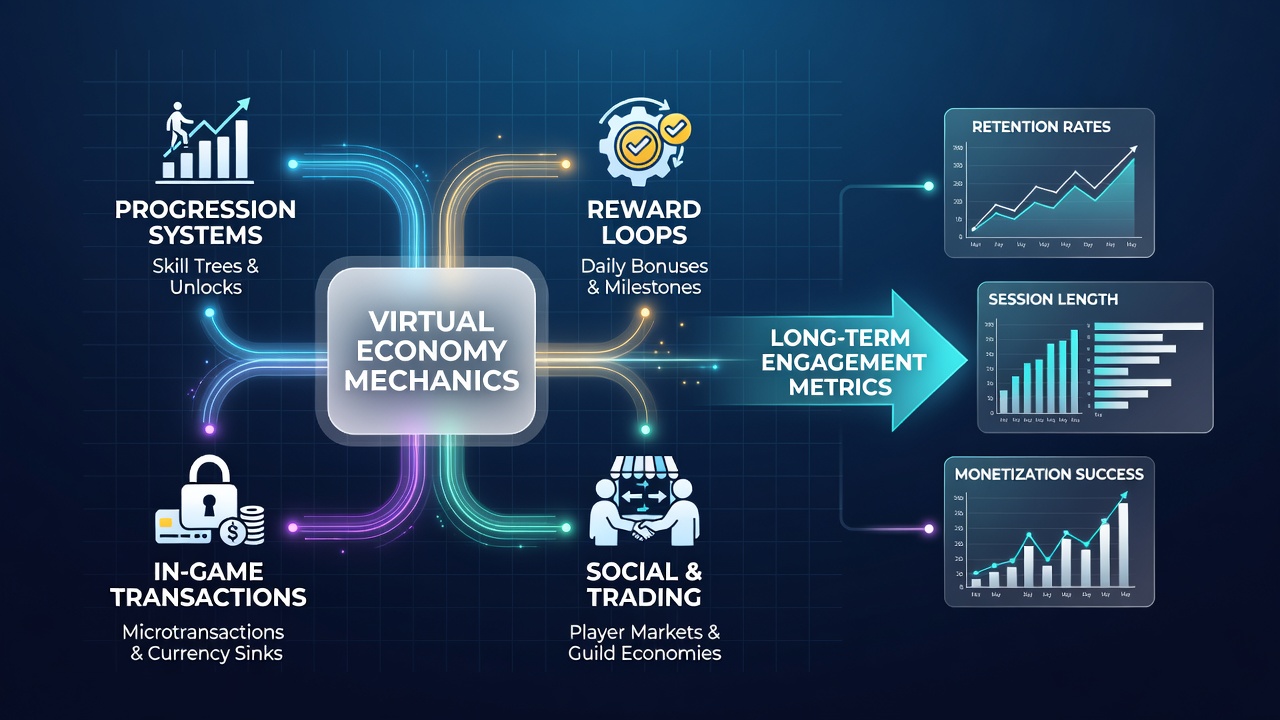
Long-term engagement metrics encompass metrics like average revenue per user alongside hours played per month, and balanced virtual economies support both by preventing inflation that devalues player effort. Experts tracking simulation catalogs note that games introducing player-to-player trading systems early maintain higher retention into later years because social economic interactions create additional return incentives beyond single-player loops. When economies lack sufficient sinks, data shows accelerated churn after peak content completion, whereas carefully tuned sinks extend active periods across digital storefront catalogs.
Simulation series that evolve economy rules through post-launch patches demonstrate measurable recovery in engagement curves, since updates that rebalance resource flows re-engage lapsed users who monitor patch notes for new trading opportunities. Academic reviews of platform telemetry confirm these adjustments produce statistically significant differences in lifetime play hours compared to unchanged titles in the same genre.
Conclusion
Virtual economy mechanics in simulation titles function as structural drivers of engagement metrics by linking resource management, trading systems, and progression pacing to observable patterns in user return rates and session depth across digital storefronts. Evidence from industry reports and platform data continues to illustrate these connections through 2026, underscoring how specific design choices shape sustained participation without relying on external review aggregates.