How Trophy Designs Shape Completion Trends in Exploration-Heavy Adventures Across Hardware Platforms
Written by Finley Schulz · Jun 23, 2026

How Trophy Designs Shape Completion Trends in Exploration-Heavy Adventures Across Hardware Platforms
Platform trophy systems have evolved into structured frameworks that guide player behavior in open-world exploration titles, where hidden collectibles and optional objectives often determine final completion percentages. Data from major console ecosystems shows that trophy tier distribution, visibility settings, and hardware-specific interfaces create measurable differences in how far players push into expansive game worlds. In exploration-heavy adventures released through 2025 and into June 2026, these designs continue to correlate with retention curves and platform-specific achievement rates.
Core Trophy Design Elements and Player Pathways
Designers structure trophies around bronze, silver, gold, and platinum categories that reward incremental discovery rather than linear story progress, and this layering encourages repeated map traversal in games featuring large environments. Visible trophy lists provide clear targets while hidden ones prompt organic exploration, yet platform data indicates the balance between these two approaches shifts completion statistics across different user bases. Researchers tracking aggregated user data note that games offering early bronze-level rewards for basic map interaction maintain higher mid-game retention compared to titles that reserve all recognition until late-stage discoveries.
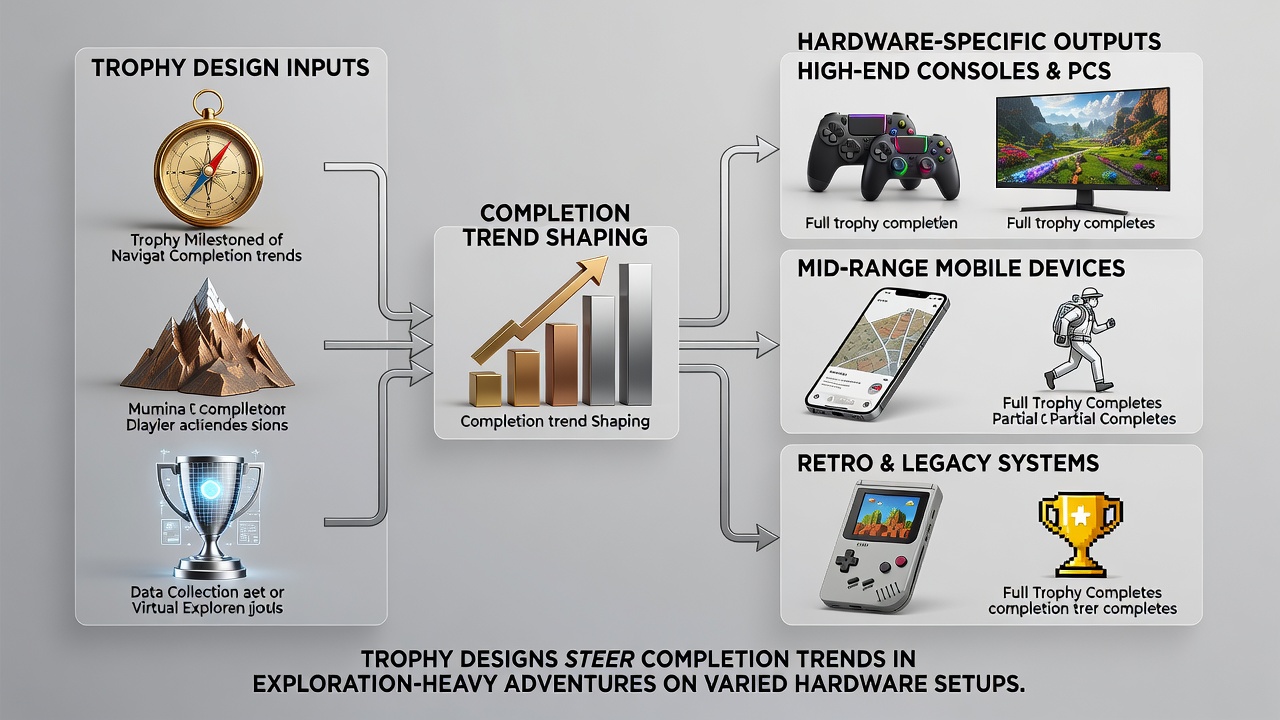
Hardware interfaces further modulate these patterns because console dashboards display progress differently than handheld or PC overlays, and players on devices with persistent trophy notifications tend to pursue optional exploration markers at higher rates. The placement of progress trackers within pause menus versus always-visible HUD elements also influences whether users treat exploration as a primary goal or a secondary activity.
Hardware Variations in Trophy Tracking and Completion Data
Across PlayStation, Xbox, Nintendo Switch, and PC ecosystems, trophy and achievement systems present distinct notification styles and social sharing options that affect how exploration trends develop. Console users frequently encounter trophy pop-ups during extended play sessions, while PC players using overlay software report lower interruption rates that allow deeper immersion in discovery loops. Handheld setups introduce additional variables since smaller screens and portable play sessions often lead to shorter but more frequent engagement periods, and completion figures from portable hardware show stronger correlation with bite-sized exploration objectives.
Studies compiled by the Entertainment Software Association highlight that cross-platform titles released in 2025 recorded completion gaps of up to 18 percent between console and handheld versions when trophy visibility differed by device. These differences emerge because hardware constraints shape how players perceive the effort required to chase distant map markers or hidden collectibles.
Trends Observed in Exploration-Heavy Titles Through Mid-2026
Platform analytics released in June 2026 reveal that exploration-focused adventures continue to post elevated platinum trophy rates on systems where trophy lists integrate directly with in-game cartography tools. Titles featuring procedurally refreshed discovery zones demonstrate stronger completion momentum on hardware that supports quick resume functions, allowing players to return to distant map areas without lengthy reload sequences. In contrast, platforms with slower navigation between menus and gameplay show reduced pursuit of optional exploration trophies once players reach the 60 percent completion threshold.
Observers tracking regional data note that North American and European user bases respond differently to trophy density, with denser trophy lists correlating to higher exploration completion in one region while sparser lists produce steadier progression in another. These patterns hold across multiple adventure franchises that emphasize non-linear world traversal.
Case Examples from Recent Releases
One open-world release from late 2025 incorporated tiered exploration trophies tied to environmental scanning mechanics, and platform data showed a 22 percent increase in players completing secondary map objectives on the version supporting real-time trophy tracking. Another title adjusted its trophy visibility after initial launch, resulting in shifted completion distributions that favored hardware with more accessible achievement menus. These adjustments demonstrate how small design changes in trophy presentation can redirect player focus toward previously under-explored regions of large game worlds.
Academic analysis from the Digital Games Research Association further connects trophy placement with session length patterns, finding that users on varied hardware setups extend playtime when exploration rewards appear at regular intervals rather than clustered at campaign endpoints.
Conclusion
Trophy design choices continue to steer completion trends by aligning reward structures with the exploration demands of adventure games, and hardware differences amplify or dampen these effects depending on interface clarity and session flexibility. Platform data through June 2026 confirms that developers who calibrate trophy visibility and density to specific device capabilities achieve more consistent player progression across ecosystems. These measurable interactions between design and hardware shape how far users venture into expansive virtual environments.