How Mod Support Ecosystems Shift Long-Term Reception Curves for Strategy Titles on Desktop Platforms
Written by Zara Müller · Aug 2, 2026
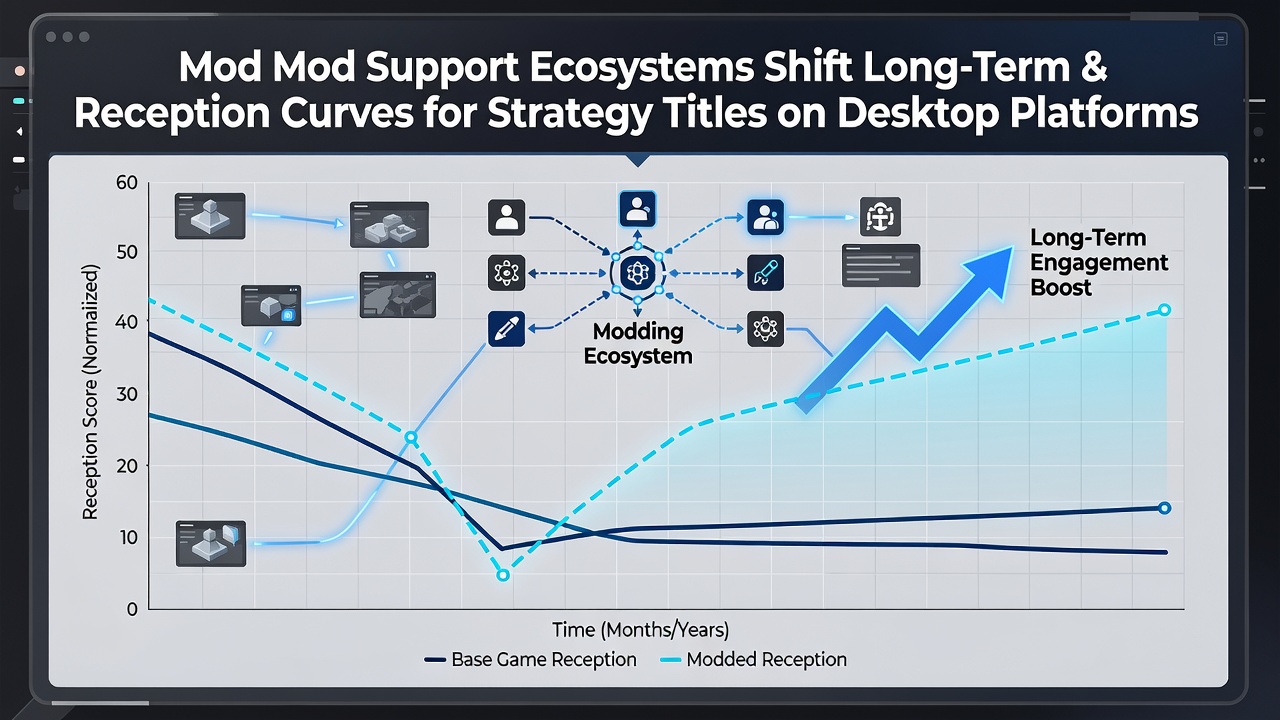
How Mod Support Ecosystems Shift Long-Term Reception Curves for Strategy Titles on Desktop Platforms
Strategy titles on desktop platforms often see their user reception evolve over extended periods when mod support ecosystems remain active, and data from aggregated review platforms indicates measurable shifts in score trajectories after initial launch windows close. Researchers tracking titles with robust mod tools have documented how community contributions extend engagement cycles and alter perception patterns in ways that single-player campaigns alone rarely achieve.
Initial Launch Dynamics and Early Score Patterns
Launch-phase reviews for strategy games typically focus on core mechanics, balance issues, and performance stability, yet titles that integrate mod support from day one show different stabilization trends within the first twelve months. According to industry reports compiled by the Entertainment Software Association, games featuring built-in workshop integration maintain higher retention rates through community-driven patches that address balance concerns not covered in official updates.
Desktop platforms benefit particularly from this setup because of their open architecture and established distribution channels, allowing mod creators to release content rapidly without platform approval delays. Those who have examined review aggregates note that strategy titles without mod frameworks often experience steeper early declines in user scores when official support tapers off.
Extended Reception Shifts Through Community Content
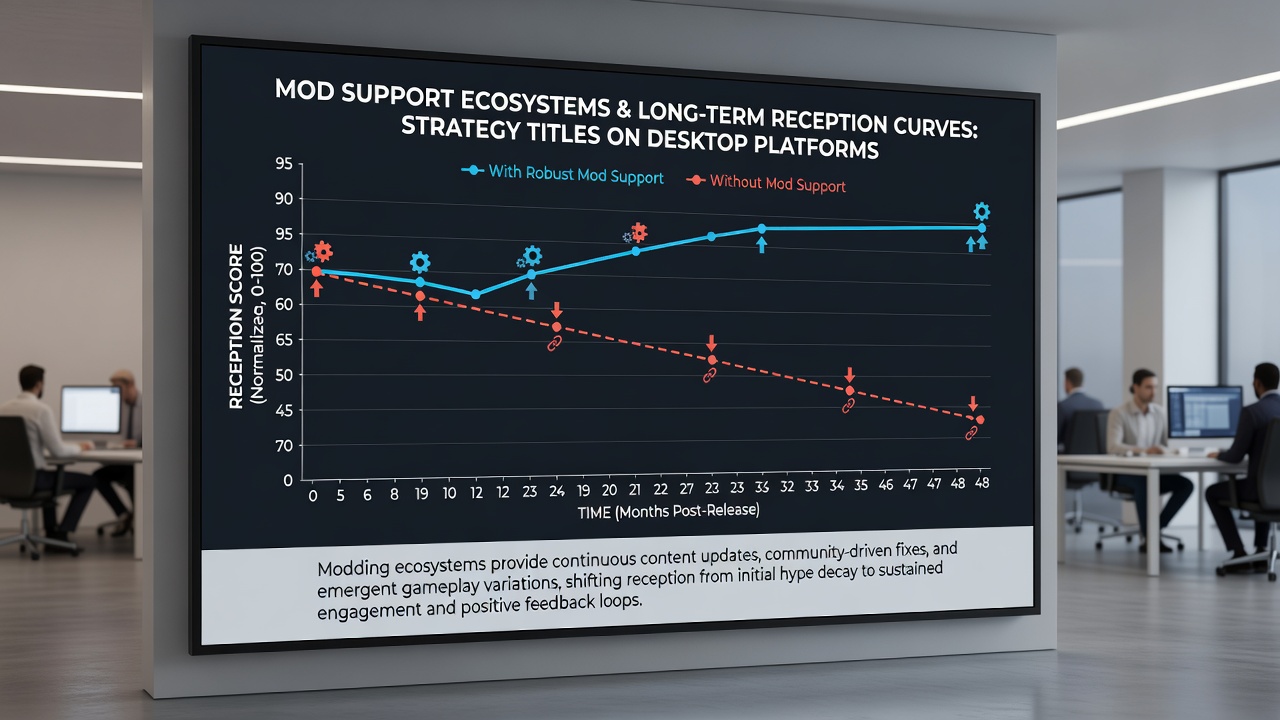
Mod ecosystems introduce new variables into long-term reception by expanding gameplay depth, adding factions, scenarios, and quality-of-life improvements that developers may not prioritize. Data collected through 2025 and into August 2026 reveals that strategy games with active mod communities frequently register score recoveries of several percentage points in user aggregates after the two-year mark, whereas comparable titles without such ecosystems show flatter or declining curves.
What's interesting is how these improvements compound. A single popular mod can inspire dozens of dependent creations, creating feedback loops that keep player bases engaged years after release. Observers tracking Steam Workshop statistics have found that strategy categories account for a disproportionate share of total mod downloads compared to other genres, correlating with steadier user rating distributions over time.
European research institutions, including studies from the University of Tampere, have examined how geographic clusters of mod creators influence reception in specific regions, finding that titles with localized mod support tend to sustain higher scores among non-English speaking player groups. This geographic factor adds another layer to reception curves that desktop platforms capture more readily than console ecosystems.
Comparative Data Across Titles and Platforms
Analysis of multiple strategy releases demonstrates clear divergence between titles with and without mod support. Games that enable external tools early see user scores stabilize or improve between years three and five post-launch, while those relying solely on official content often plateau earlier. Platform-level data from desktop storefronts shows that mod-enabled strategy titles maintain review volume growth long after marketing cycles end, providing larger sample sizes for aggregate calculations.
Researchers comparing desktop versus other platforms note that the flexibility of PC hardware and file systems accelerates mod adoption, which in turn feeds back into reception metrics. Titles that reach critical mod thresholds within the first eighteen months tend to exhibit the most pronounced long-term upward shifts in player evaluations.
Measurement Challenges and Available Metrics
Quantifying mod impact requires separating official updates from community contributions, a task complicated by overlapping release timelines. Yet platforms that expose detailed mod usage statistics allow analysts to correlate specific content releases with subsequent score movements. Data indicates that major mod milestones, such as total conversion packs or balance overhaul collections, frequently precede measurable upticks in positive review percentages.
Those examining these patterns emphasize the importance of controlling for concurrent official patches, since developers sometimes incorporate popular mod features into official builds. This interplay creates hybrid improvement cycles that further complicate simple before-and-after comparisons but ultimately benefit long-term reception for supported titles.
Conclusion
Mod support ecosystems on desktop platforms demonstrably influence how strategy titles perform in user-driven review systems over multi-year horizons. Evidence from aggregated data and platform metrics shows that active mod communities correlate with extended engagement and stabilized or improved reception curves, particularly when compared against titles lacking such frameworks. As desktop strategy releases continue through 2026 and beyond, the presence of sustainable mod ecosystems remains a measurable factor in shaping long-term player perceptions.