How Beta Branch Experimentation Reshapes Aggregate Player Responses in Live-Service Strategy Titles
Written by Henrik Schmitt · Aug 16, 2026
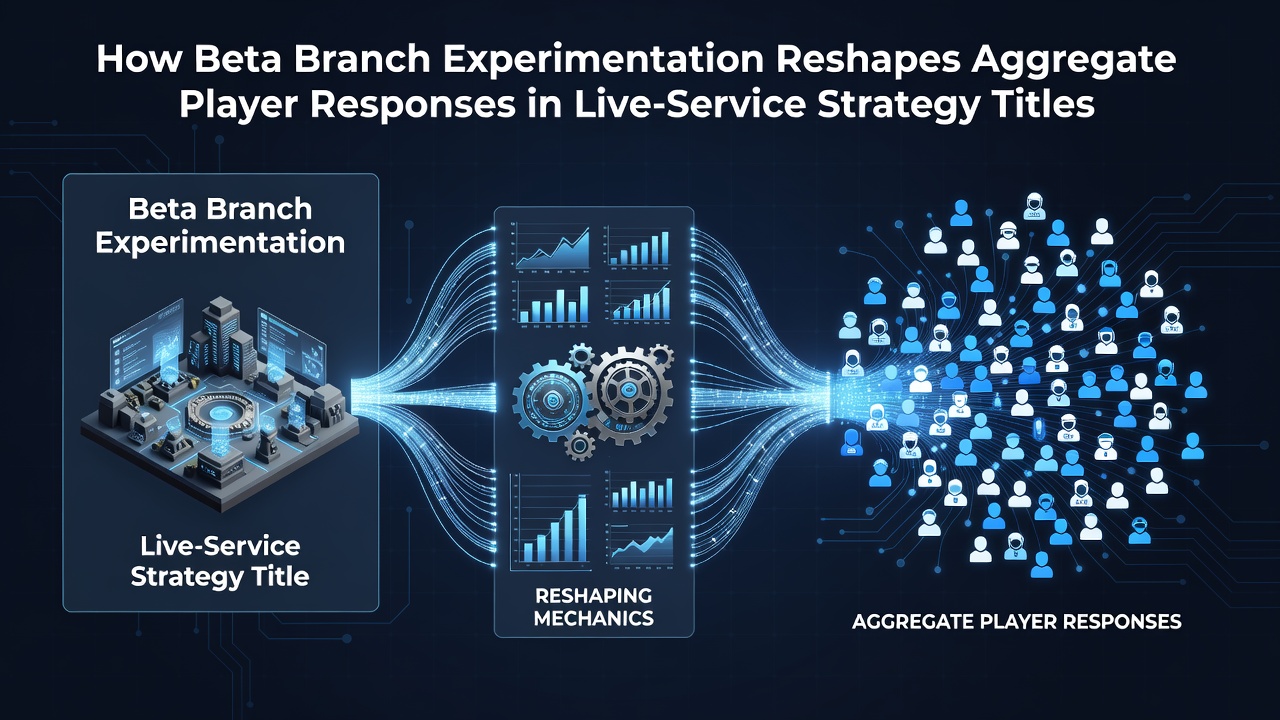
How Beta Branch Experimentation Reshapes Aggregate Player Responses in Live-Service Strategy Titles
Live-service strategy titles rely on ongoing updates to maintain engagement, and beta branch experimentation has emerged as a primary method for testing changes before full deployment. Developers deploy experimental features, balance adjustments, and new mechanics to limited player groups through these branches, then track how those modifications influence aggregated user ratings across platforms. Research from the Entertainment Software Association indicates that such testing occurs in over 70 percent of major strategy franchises with persistent online components, allowing studios to refine elements like resource economies and unit interactions while monitoring shifts in review scores and completion metrics.
Mechanics Behind Beta Branch Deployment
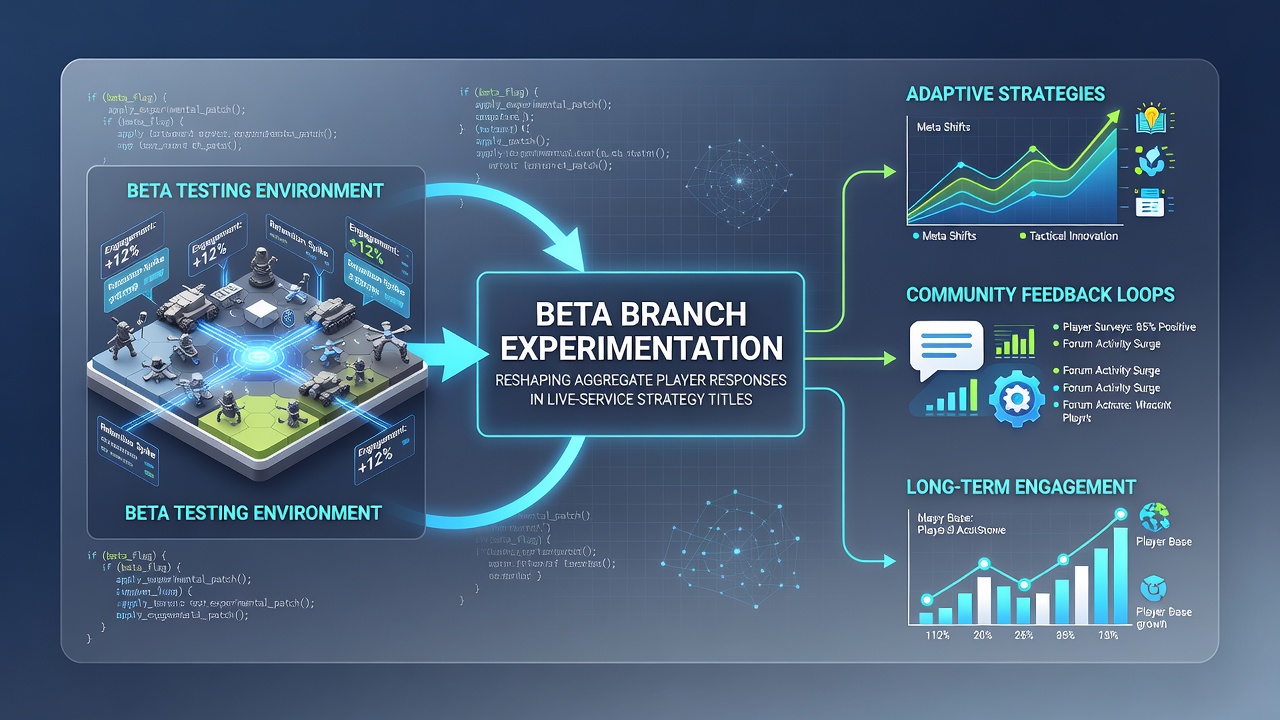
Teams segment player bases by region, playtime history, and hardware type when rolling out beta versions, which creates controlled environments for data collection on everything from match durations to in-game purchase patterns. Strategy games such as those in the real-time tactics category often use these branches to trial revised AI behaviors or map layouts, and the resulting telemetry feeds directly into adjustments that appear in subsequent patches. Observers note that this process typically spans two to four weeks per cycle, giving developers time to compare pre-test and post-test user score distributions without committing the entire community to unproven alterations.
Platforms hosting these titles integrate feedback tools that capture both quantitative data like average session length and qualitative notes from forums or in-game surveys. When a beta change improves win-rate balance across factions, aggregate ratings frequently stabilize or rise in the weeks following rollout, whereas untested alterations have produced measurable dips in satisfaction scores according to industry tracking services. This iterative approach differs from traditional launch reviews because it allows refinement after initial release, reshaping how player collectives perceive the title over extended periods.
Impact on Aggregated User Scores and Retention
Data compiled through 2025 demonstrates that titles employing systematic beta testing experience narrower score variance in user aggregates compared to those that release major updates without prior segmentation. In strategy genres, where small mechanical tweaks can cascade into widespread strategic shifts, beta branches help isolate variables that affect perception, such as resource generation rates or defensive structure viability. A report from the Interactive Software Federation of Europe highlights that European-based studios adopting these methods saw average user scores improve by 0.3 to 0.5 points on standardized scales within three months of implementing tested changes.
What's interesting is how these experiments influence long-term retention curves, because players who participate in beta branches often report higher investment once features reach the main client. Aggregate responses then reflect this through sustained positive review trends rather than isolated spikes. August 2026 brought several documented cases where strategy titles adjusted naval combat systems via beta channels, resulting in stabilized leaderboard participation and reduced negative feedback volume across global servers.
Geographic and Demographic Variations in Feedback
Player responses vary by region when beta experiments introduce culturally specific elements like localized unit voice lines or event timing, and studies from Australian research institutions show that Asia-Pacific players tend to reward tested quality-of-life improvements more consistently than untested overhauls. North American cohorts, by contrast, demonstrate quicker score adjustments when experimentation targets competitive ladder integrity. These patterns emerge because beta participants often share experiences within regional communities, amplifying or dampening aggregate trends before full release.
Demographic segmentation further refines outcomes, with veteran players providing feedback that prioritizes depth while newer participants focus on accessibility. When developers cross-reference these inputs against overall rating data, they can predict how a change will land across the broader population. Figures from Canadian digital media analyses reveal that titles maintaining transparent beta communication channels sustain higher platform-wide evaluations even during periods of mechanical flux.
Future Trajectories for Experimentation Practices
Continued refinement of beta systems points toward greater integration with machine learning models that forecast score impacts before deployment, reducing reliance on manual analysis. Strategy titles stand to benefit particularly because their complex systems generate rich datasets during testing phases. Those who have examined multiple release cycles note that consistent application of this methodology correlates with steadier aggregate trajectories across hardware ecosystems and player skill brackets.
Conclusion
Beta branch experimentation continues to serve as a foundational tool for managing player response aggregation in live-service strategy environments, supported by evidence from multiple international tracking efforts. The practice enables targeted refinement that feeds into broader score stability, with documented effects across regions and player segments. As these methods evolve alongside advancing analytics capabilities, their role in shaping sustained reception patterns remains central to how developers navigate ongoing title support.