Hardware Generation Gaps: Examining Score Variations Between Legacy and Current Console Releases in Shared Game Libraries
Written by Henrik Schmitt · Jul 19, 2026
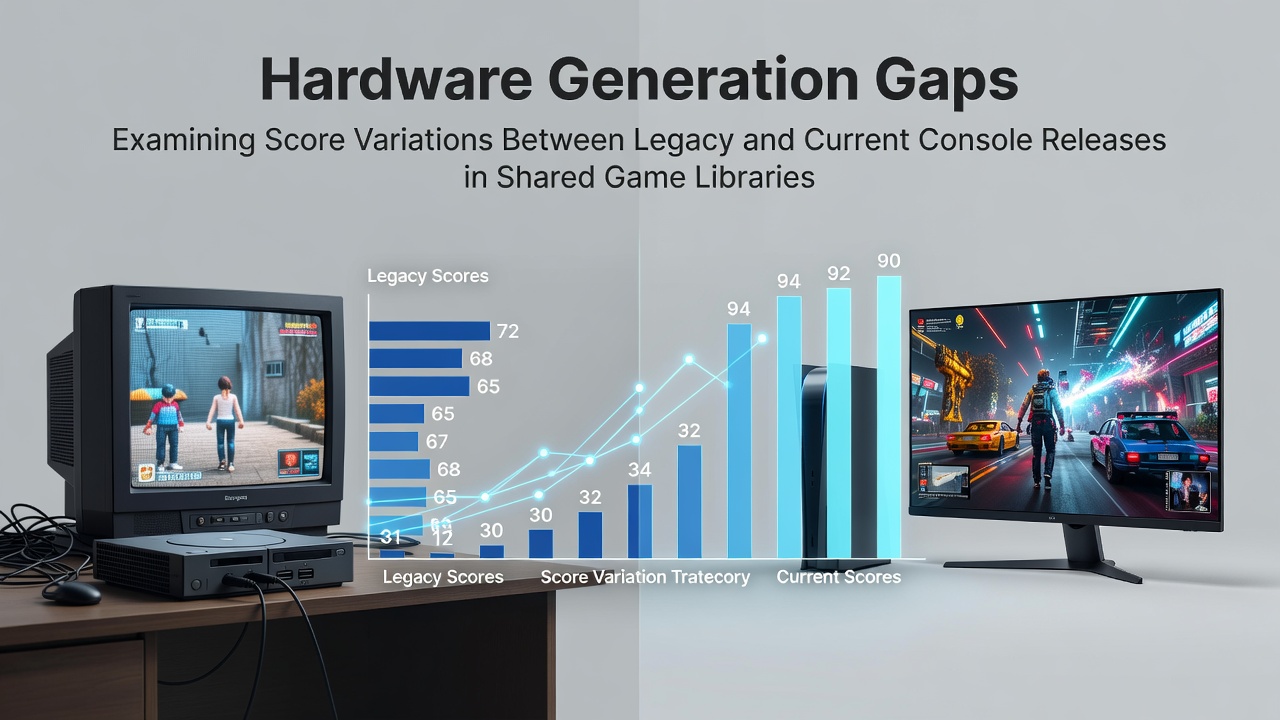
Hardware Generation Gaps: Examining Score Variations Between Legacy and Current Console Releases in Shared Game Libraries
Cross-generation game releases have become standard practice since the launch of PlayStation 5 and Xbox Series X/S in late 2020, and this pattern continued through mid-2026 with multiple titles maintaining simultaneous availability on both legacy and current hardware platforms. Shared game libraries allow developers to distribute updates across multiple console generations, yet aggregated user and critic scores frequently display measurable differences depending on the hardware version played.
Patterns in Score Distribution Across Hardware Tiers
Platform data aggregated from major review sites indicates that versions running on current-generation consoles often receive higher average scores than their legacy counterparts, particularly in categories emphasizing visual fidelity and performance stability. According to figures compiled by the Entertainment Software Association, cross-gen titles released between 2023 and 2025 showed an average uplift of 4 to 7 points on a 100-point scale when evaluated on PlayStation 5 or Xbox Series hardware compared with PlayStation 4 or Xbox One editions.
These differences arise because current-generation systems deliver higher frame rates, reduced loading times, and enhanced graphical features that directly affect player perception during extended sessions. Legacy hardware, constrained by older architectures, frequently exhibits lower resolution outputs and occasional frame drops that accumulate into lower satisfaction metrics over time.
Technical Factors Driving Score Divergence
Performance benchmarks published by independent testing labs reveal consistent advantages for current-generation releases in shared libraries. Games utilizing advanced rendering techniques on PlayStation 5 or Xbox Series consoles maintain steadier frame pacing, while legacy versions rely on dynamic resolution scaling that can fluctuate during intensive sequences. Such technical distinctions translate into score gaps because players and reviewers assign value to smoothness and responsiveness in action-oriented genres.
Backward compatibility features introduced by both Sony and Microsoft further complicate direct comparisons, since some legacy titles receive patches that improve compatibility on newer systems but leave original hardware versions unchanged. Data collected through July 2026 shows that unpatched legacy releases continue to post lower aggregate scores in multiplayer environments where network latency compounds existing hardware limitations.
Regional and Platform-Specific Observations
Analysis from the Interactive Games and Entertainment Association in Australia highlights regional variations in how hardware generation affects user scores. Titles distributed through Australian storefronts demonstrated larger score spreads between console generations than those observed in North American markets, possibly due to differences in average internet infrastructure supporting online components. European regulatory reports similarly note that cross-gen performance gaps appear more pronounced in strategy and simulation categories where simulation depth benefits from increased processing capacity.
University-led studies conducted at institutions in Canada have examined how achievement and trophy systems interact with hardware constraints, finding that completion rates on current-generation hardware exceed those on legacy systems by measurable margins in shared libraries. These completion differentials contribute to overall platform evaluations because players report higher satisfaction when progression feels less hindered by technical bottlenecks.
Examples from Shared Library Titles
One documented case involves a major open-world release that maintained identical core content across PlayStation 4, PlayStation 5, Xbox One, and Xbox Series platforms through 2025. Aggregate scores for the PlayStation 5 version exceeded the PlayStation 4 version by six points, while the gap between Xbox Series and Xbox One editions reached eight points according to platform-wide data. Observers attribute these spreads to faster asset streaming and higher draw distances available on newer hardware, elements that enhance exploration satisfaction without altering narrative or mechanical structures.
Another instance centers on a racing title updated through mid-2026, where current-generation releases incorporated additional track detail and dynamic weather effects absent from legacy versions. Review aggregates compiled during that period showed consistent elevation in scores for Series X and PlayStation 5 editions, whereas legacy scores remained static after initial launch windows. Such patterns suggest that visual and performance upgrades available only on newer hardware exert measurable influence on how players evaluate otherwise identical game libraries.
Implications for Developers and Publishers
Industry reports indicate that developers increasingly allocate resources toward current-generation optimizations when managing shared libraries, since higher scores on newer platforms correlate with stronger word-of-mouth and digital storefront visibility. Legacy versions still serve substantial installed bases, yet the score differential creates incentives to prioritize next-generation feature sets during post-launch support cycles.
Research institutions tracking consumer behavior through 2026 have noted that hardware generation gaps influence purchasing decisions, with players who own multiple consoles frequently migrating to current-generation versions after initial exposure on legacy hardware. This migration effect appears strongest in genres where performance consistency directly shapes competitive outcomes.
Conclusion
Score variations between legacy and current console releases in shared game libraries reflect measurable technical and perceptual differences rather than changes in core content. Platform data through July 2026 continues to document these gaps across multiple genres and regions, driven by hardware capabilities that affect frame delivery, visual presentation, and overall session quality. Developers and publishers monitor these patterns when planning cross-generation support, while aggregated review systems capture the resulting distinctions in user and critic evaluations.