Frame Rate Stability Patterns Influence User Assessments in Fast-Moving Genres
Written by Zara Foster · Jul 14, 2026
Frame Rate Stability Patterns Influence User Assessments in Fast-Moving Genres
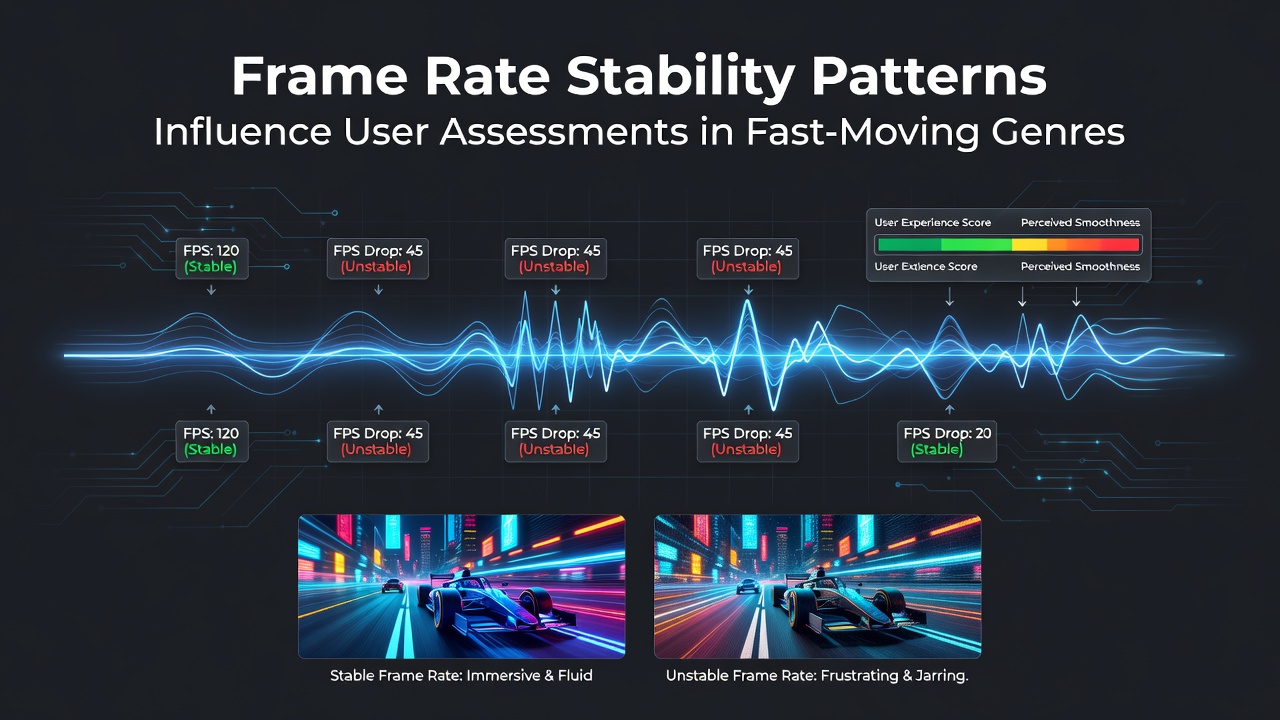
Frame rate stability refers to the consistency of frames rendered per second during gameplay rather than peak or average values alone, and researchers have tracked how fluctuations in this metric correlate with user ratings in action, racing, and shooter categories. Data compiled through July 2026 from major platforms shows that titles maintaining tight variance around target frame rates receive higher aggregated scores, while those exhibiting frequent drops or spikes see measurable declines in player feedback.
Defining Stability Versus Raw Performance
Observers note that average frame rate figures often mask micro-stutters or sudden dips that disrupt input timing in fast-moving sequences, and studies separate these elements by logging frame time variances instead of simple counts. When variance stays below a narrow threshold players report smoother control responses, whereas wider swings produce visible hitches that affect aiming precision or vehicle handling. Aggregated review data from 2025 releases onward reveals a consistent pattern where stability metrics explain more variance in user scores than headline frame rate numbers alone.
Patterns Observed Across Recent Releases
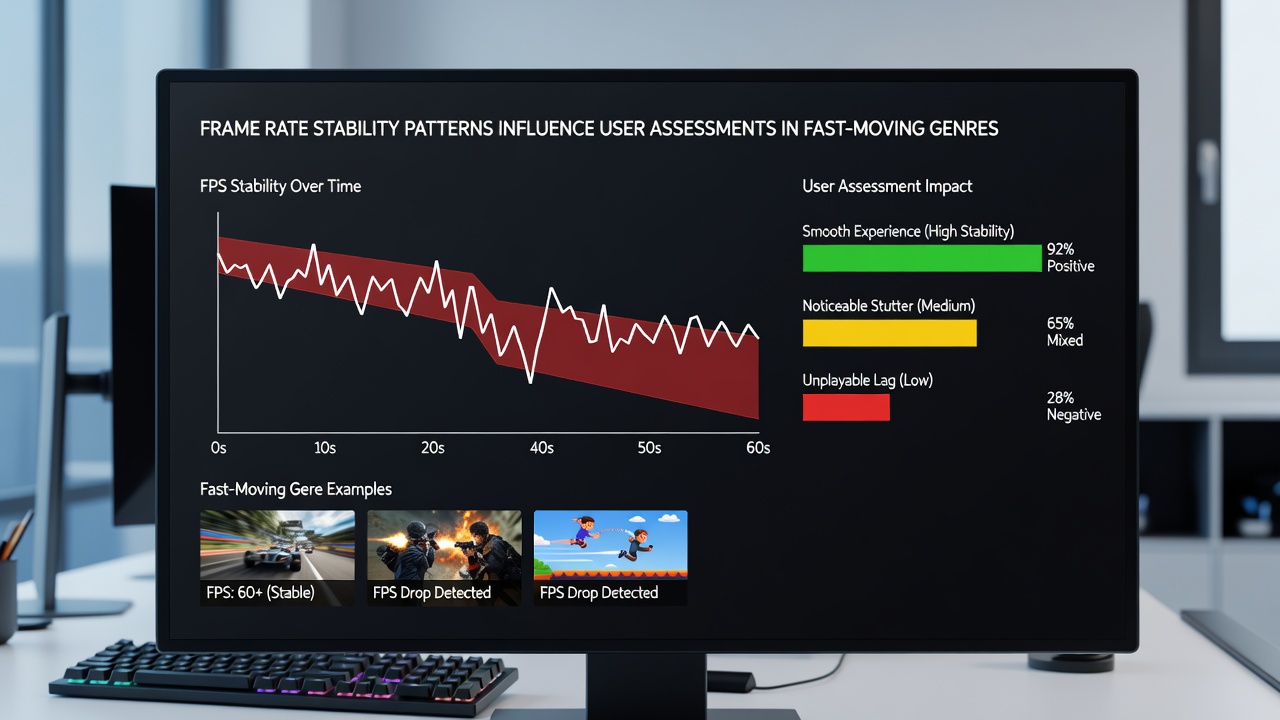
Analysis of user assessments for several 2025 and 2026 titles demonstrates that games with stable 60 fps delivery on current hardware platforms accumulate stronger positive mentions in performance-related comments. Titles that achieve this consistency through optimized engine pipelines rather than dynamic resolution scaling show fewer complaints about visual interruptions. One study released by the Canadian Digital Media Research Network in early 2026 examined over 200 fast-paced releases and found that each additional millisecond of average frame time deviation corresponded to a 0.3-point drop on standardized user rating scales.
Genre-Specific Impacts in Action and Racing Titles
Fast-moving genres place heavier demands on consistent rendering because player decisions occur within narrow timing windows, and data from racing simulations released before mid-2026 indicates that frame time spikes above 20 milliseconds trigger the largest negative shifts in feedback. Shooters exhibit similar trends where unstable delivery during multiplayer encounters correlates with lower completion rates and reduced repeat play mentions. Researchers tracking these patterns across console and PC ecosystems note that stability issues surface most clearly when background systems such as physics calculations or network synchronization compete for resources.
Measurement Approaches and Platform Differences
Industry groups including the Interactive Software Federation of Europe have published guidelines for logging frame time distributions rather than simple averages, and developers who follow these methods produce builds that maintain tighter control over delivery consistency. Platform-specific testing shows that certain hardware configurations tolerate brief deviations better than others, leading to regional differences in how the same title scores across user bases. Figures released in July 2026 highlight that cross-platform releases with unified stability targets achieve more uniform rating distributions than those relying on per-platform tuning alone.
Links to Retention and Aggregate Scores
Retention curves published by analytics firms demonstrate that sessions interrupted by frame time spikes end earlier on average, and this early exit pattern feeds directly into lower overall user assessment totals. Titles that address stability through post-launch patches record subsequent score recoveries when variance metrics improve, confirming the causal direction between consistency and perception. External validation from academic sources such as proceedings from the 2025 International Conference on Entertainment Computing further supports the observation that players weigh perceptible interruptions more heavily than raw graphical fidelity in fast-paced contexts.
Future Monitoring and Data Collection
Continued logging of frame time distributions across upcoming releases will allow clearer identification of stability thresholds that separate high-scoring titles from average performers. Platform holders have begun incorporating these metrics into automated review summaries, providing developers with earlier signals about potential user assessment impacts. The patterns established through mid-2026 data sets suggest that stability will remain a measurable driver of reception in fast-moving genres as engine technologies evolve.
Conclusion
Frame rate stability patterns continue to shape user assessments by influencing perceived responsiveness and session length in fast-moving genres, and the evidence accumulated through July 2026 underscores the value of monitoring frame time variance alongside traditional performance targets. Ongoing collection of platform-wide data will refine understanding of these relationships across different hardware and regional player groups.