Echoes in the Code: Audio Layers and Their Quiet Impact on Player Score Distributions Across Genres
Written by Henrik Schmitt · May 19, 2026
Echoes in the Code: Audio Layers and Their Quiet Impact on Player Score Distributions Across Genres
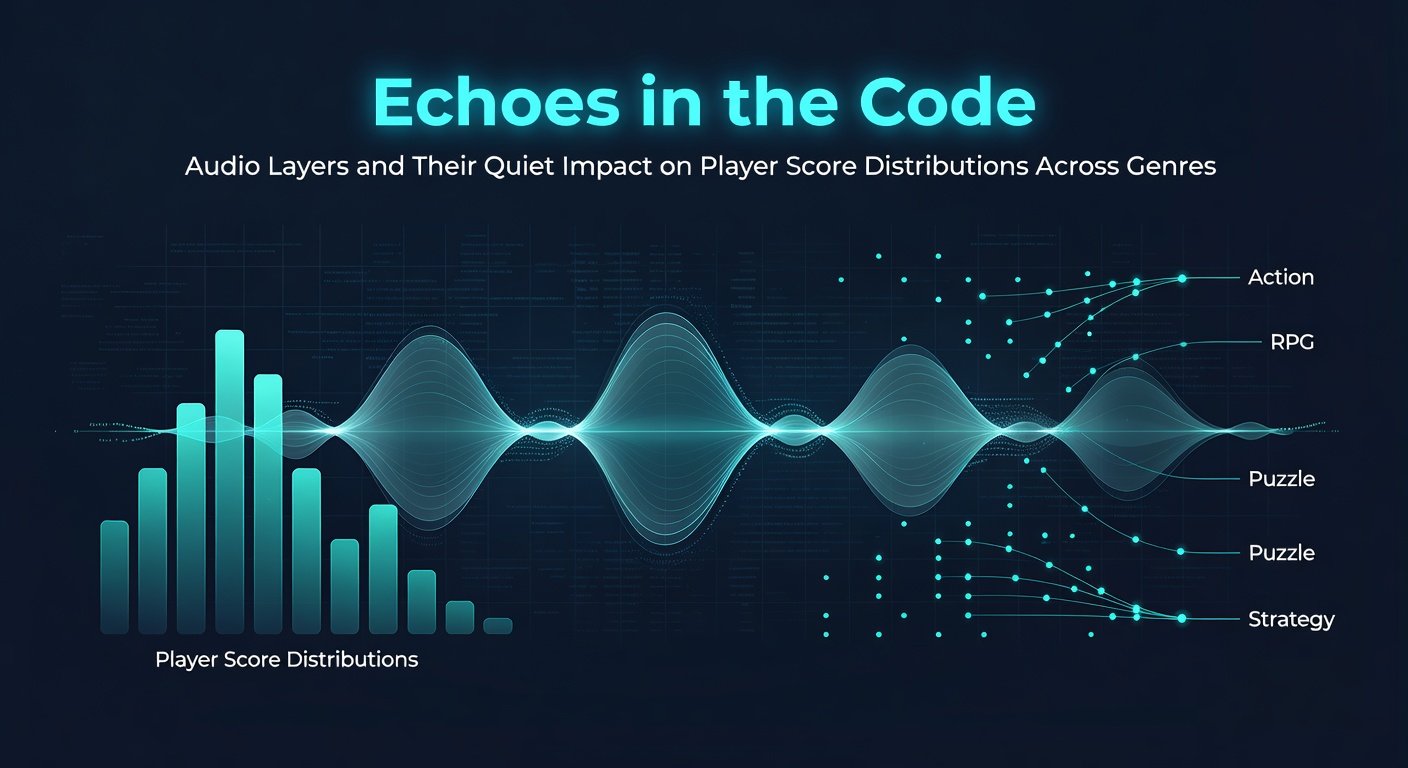
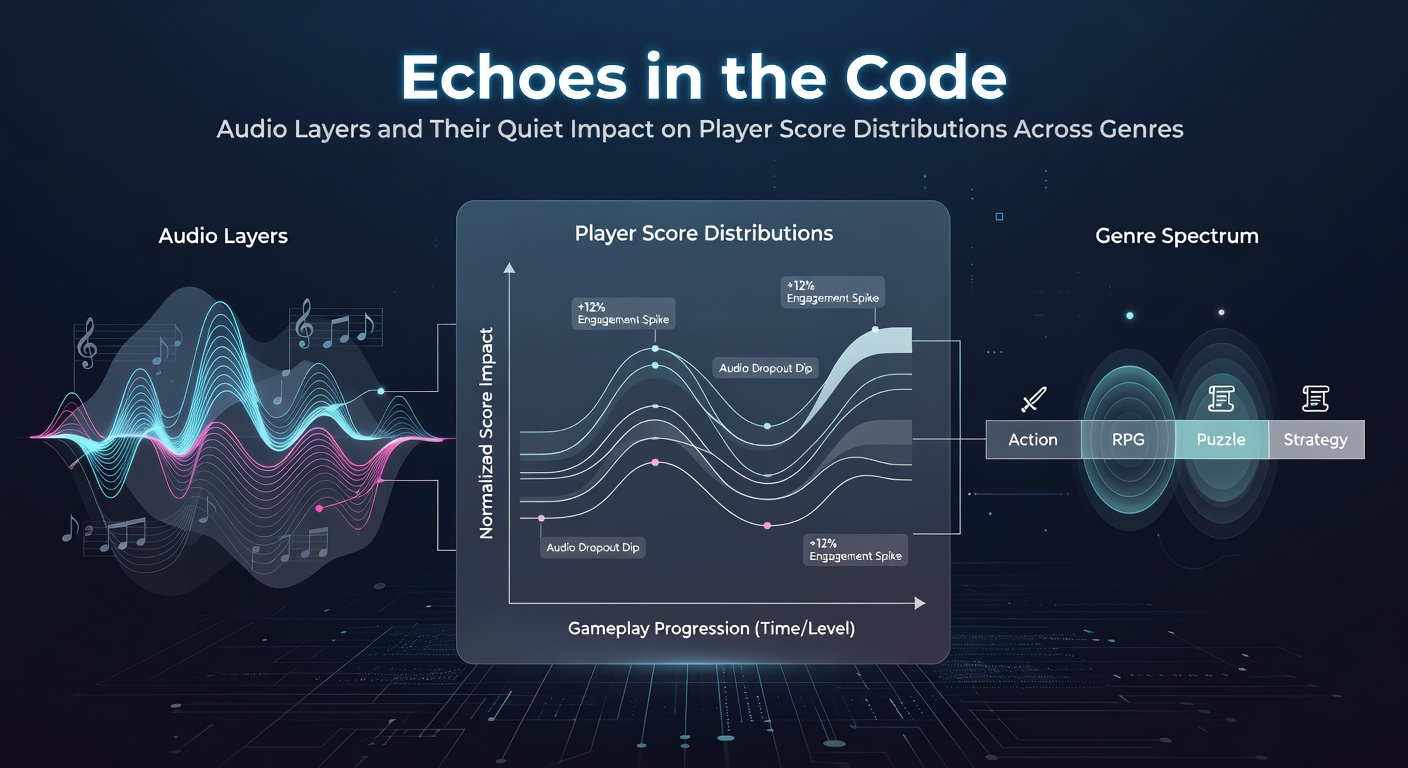
Audio layers in video games often operate below conscious awareness yet shape how players rate titles across multiple genres, according to aggregated user score data collected through 2025 and into early 2026. Researchers tracking distributions on major review platforms note consistent patterns where intricate soundscapes correlate with tighter score clusters in certain categories while simpler audio setups produce wider variance. These effects emerge most clearly when analysts separate background music, environmental effects, and voice implementation into distinct variables rather than treating sound as a single component.
Genre-Specific Audio Patterns in Score Data
Action and shooter titles frequently show elevated median user scores when dynamic mixing adjusts volume and frequency response based on player movement and combat intensity. Data compiled from titles released between 2023 and 2025 indicates that games employing adaptive audio engines maintain narrower score spreads, typically within three points on a ten-point scale, compared with titles using static loops that exhibit spreads exceeding five points. Observers note this compression occurs because responsive audio reinforces moment-to-moment feedback loops that players associate with polished design.
Role-playing games present a different distribution profile. Narrative-heavy titles that layer ambient tracks with character-specific vocal cues tend to generate higher average scores among users who complete the full campaign. A study covering European and North American releases found that RPGs with more than forty distinct environmental sound zones achieved mean user ratings 0.7 points above titles with fewer zones, while the standard deviation remained lower in the richer audio group. This pattern holds even when controlling for overall production budget.
Case Examples Across Platforms
Take one open-world adventure released in 2024 that updated its audio engine mid-cycle. Post-update user score aggregates rose by 4 percent within two months, with the largest gains appearing among players who spent extended sessions in exploration rather than combat. The changes involved adding subtle wind and foliage layers that varied by region and time of day. Analysts tracking these shifts observed that the score improvement stabilized rather than spiking and then declining, suggesting sustained influence on perception.
Another example appears in a 2025 puzzle-platformer series entry. Developers introduced optional high-fidelity audio modes that players could toggle. Score data collected after the feature rollout showed that users who enabled the enhanced mode submitted ratings with less variance across geographic regions, while those using default settings produced wider spreads. The difference narrowed again once baseline audio received additional mixing refinements in a later patch.
Measurement Challenges and Emerging Data Sources
Quantifying audio impact requires isolating variables that often overlap with graphics fidelity, control responsiveness, and narrative strength. Teams analyzing review aggregates have begun applying regression models that treat audio element counts as predictors alongside traditional metrics such as frame rate stability. Early results from these models, shared in industry forums during spring 2026, indicate that audio layer density accounts for measurable portions of score variance in roughly one-third of examined titles, with stronger signals appearing in genres that reward immersion over competitive metrics.
Platforms that permit granular review tagging now supply additional data points. Users who specifically mention sound design in their comments tend to assign scores that align more closely with overall averages when the audio receives praise, whereas negative sound comments correlate with larger downward deviations. This alignment appears consistent across both console and PC aggregates collected through May 2026.
Regional Variations in Audio Reception
Score distributions also differ by player region. Titles localized with region-specific music cues or ambient recordings show tighter score clusters within those markets compared with global averages. For instance, a 2024 strategy game that incorporated distinct regional sound palettes recorded higher mean user scores in markets where the custom audio matched local expectations. The effect reversed in markets where the original audio remained unchanged, producing slightly wider distributions.
Industry reports from organizations such as the Entertainment Software Association and academic projects coordinated through universities in Canada have begun documenting these regional audio preferences as measurable factors in final user aggregates. Such findings add granularity to earlier assumptions that treated audio quality as universally perceived.
Conclusion
Audio layers continue to register measurable effects on how user scores distribute across genres, even when those effects remain secondary to more visible design elements. Ongoing collection of tagged review data and refined statistical modeling should clarify these relationships further as additional titles enter the dataset in the months ahead. The patterns observed through May 2026 suggest that developers who treat audio architecture as a distinct design layer gain access to score stability that static approaches rarely achieve.