Cultural Currents in Feedback: Examining How Geographic Factors Modify Aggregated Player Responses to International Titles
Written by Finley Schulz · May 24, 2026
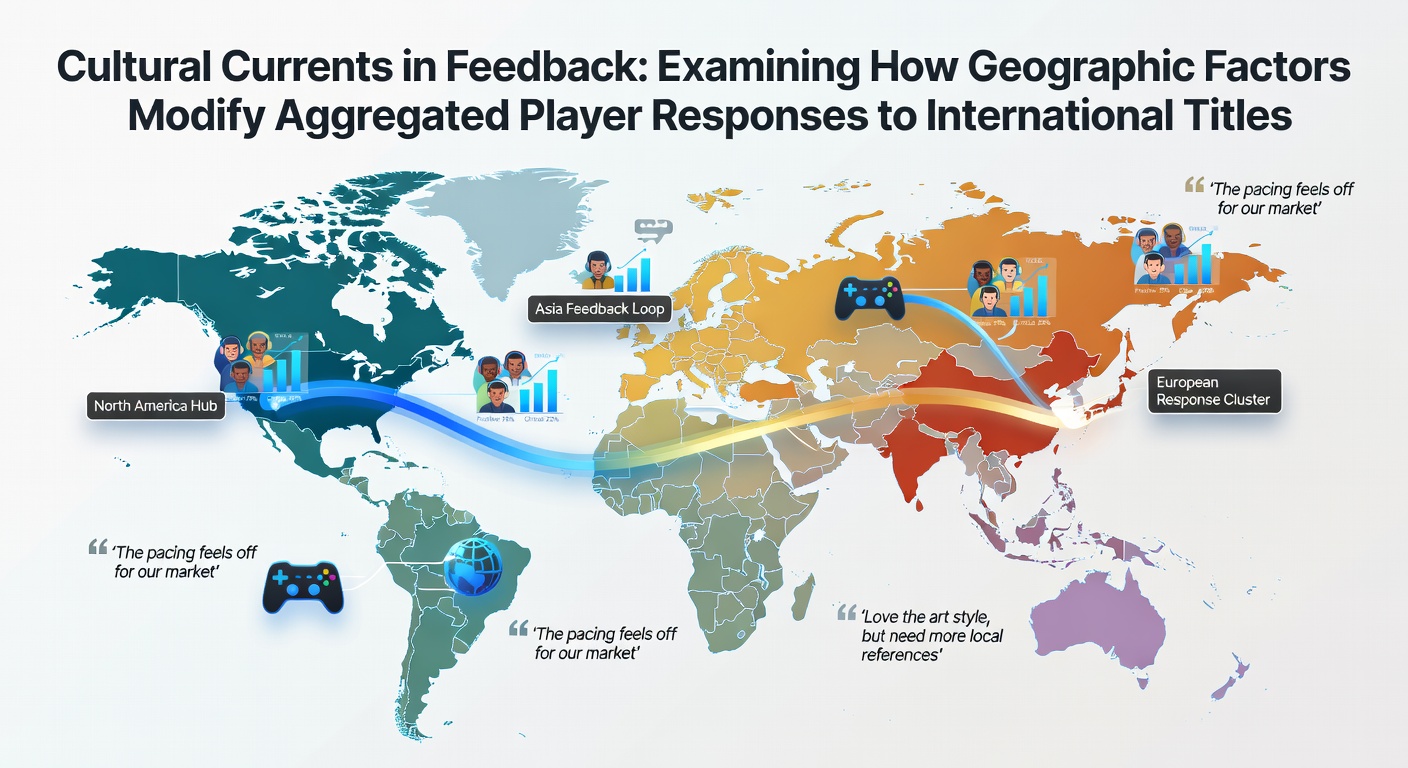
Cultural Currents in Feedback: Examining How Geographic Factors Modify Aggregated Player Responses to International Titles
Geographic factors shape how players respond to international titles, and aggregated feedback systems capture these variations through regional score distributions that often diverge sharply from global averages. Data from major platforms shows consistent patterns where cultural context, local market conditions, and language accessibility alter the way users rate games developed outside their home regions.
Researchers analyzing review aggregates note that titles originating in one country frequently receive different reception profiles depending on the reviewer's location, with scores clustering around specific themes such as narrative style or mechanical complexity. These differences emerge clearly when data breaks down by country or broader geographic zones rather than remaining pooled at the worldwide level.
Regional Score Variations in Aggregated Data
Platforms that collect user ratings reveal measurable gaps between regions for the same international release, and studies tracking these splits indicate that East Asian markets sometimes assign higher marks to titles with intricate systems while North American and European aggregates tilt toward games emphasizing story accessibility. One analysis of multi-region datasets found that action-adventure games developed in Japan posted average scores 0.8 points higher on a 10-point scale among reviewers in South Korea compared with reviewers in Germany.
Language localization quality plays a documented role in these outcomes because incomplete or culturally mismatched translations correlate with lower regional scores even when core gameplay remains unchanged. Aggregators that segment reviews by primary language spoken show that titles with robust native-language support maintain tighter score ranges across borders, whereas those relying on machine-assisted or partial localization experience wider variance.
Cultural Norms and Feedback Patterns
Cultural expectations around difficulty, pacing, and content themes influence how players articulate their responses in public aggregates. Observers tracking Steam and similar storefronts report that certain horror titles receive stronger praise in markets where supernatural storytelling traditions align closely with game narratives, producing score clusters that exceed those recorded in regions with different folklore foundations.
Marketing approaches also register in the data, since regional campaigns that emphasize particular features can shift the aspects players highlight in reviews. Figures from industry tracking services demonstrate that games promoted heavily around competitive elements in one territory accumulate more feedback focused on balance and multiplayer features, while the same title marketed around single-player exploration in another territory draws commentary centered on atmosphere and world design.

Platform Data and Geographic Segmentation
Steam's regional review tools and similar features on console storefronts allow direct comparison of score distributions, and analysts who examine these segmented datasets identify recurring trends. A 2025 report prepared by the Interactive Software Federation of Europe documented that role-playing games from Western studios posted higher median user scores in Australia and Canada than in several Southeast Asian markets, whereas the reverse pattern appeared for certain Eastern-developed titles.
These geographic modifications persist even after controlling for release timing and update history, suggesting that underlying player expectations tied to location remain influential. Aggregated responses to remastered international releases further illustrate the point, with older titles sometimes experiencing score rebounds in specific regions years after initial launch due to renewed cultural interest or improved local availability.
Case Examples from Recent Releases
Multiple international titles released between 2024 and 2026 illustrate how geography modifies feedback. One open-world action game developed in North America recorded its highest regional averages in the United Kingdom and Scandinavia while showing comparatively lower scores in Japan, where reviewers placed greater weight on combat precision metrics. Conversely, a narrative-driven adventure originating in South Korea achieved stronger aggregates in parts of Latin America than in its domestic market, according to platform-segmented data.
Academic researchers at institutions in Canada and Australia have begun cross-referencing these platform figures with survey responses collected from representative player samples, and early findings align with the observed regional score divergences. The patterns hold across both AAA and independent releases, indicating that geographic influence operates independently of production scale.
Implications for Aggregated Review Systems
Review aggregation services increasingly account for geographic weighting when generating headline scores, yet raw regional breakdowns remain available for those examining underlying data. This transparency enables developers and publishers to identify territories where reception diverges and to adjust future localization or marketing strategies accordingly. Data collected through May 2026 continues to reinforce that geography functions as a consistent modifier rather than a random variable in player response aggregates.
Conclusion
Geographic factors produce measurable effects on how international titles accumulate player feedback, and segmented data from major platforms documents these regional differences consistently across genres and release windows. Language support, cultural alignment, and localized marketing contribute to the observed variations, while ongoing research from multiple continents provides further context for interpreting the patterns. Aggregated systems that preserve geographic granularity therefore offer a more complete picture of global reception than pooled worldwide scores alone.