Cross-Save Mechanics and Their Impact on Player Retention in Shared Universe Games
Written by Finley Schulz · Jun 26, 2026
Cross-Save Mechanics and Their Impact on Player Retention in Shared Universe Games
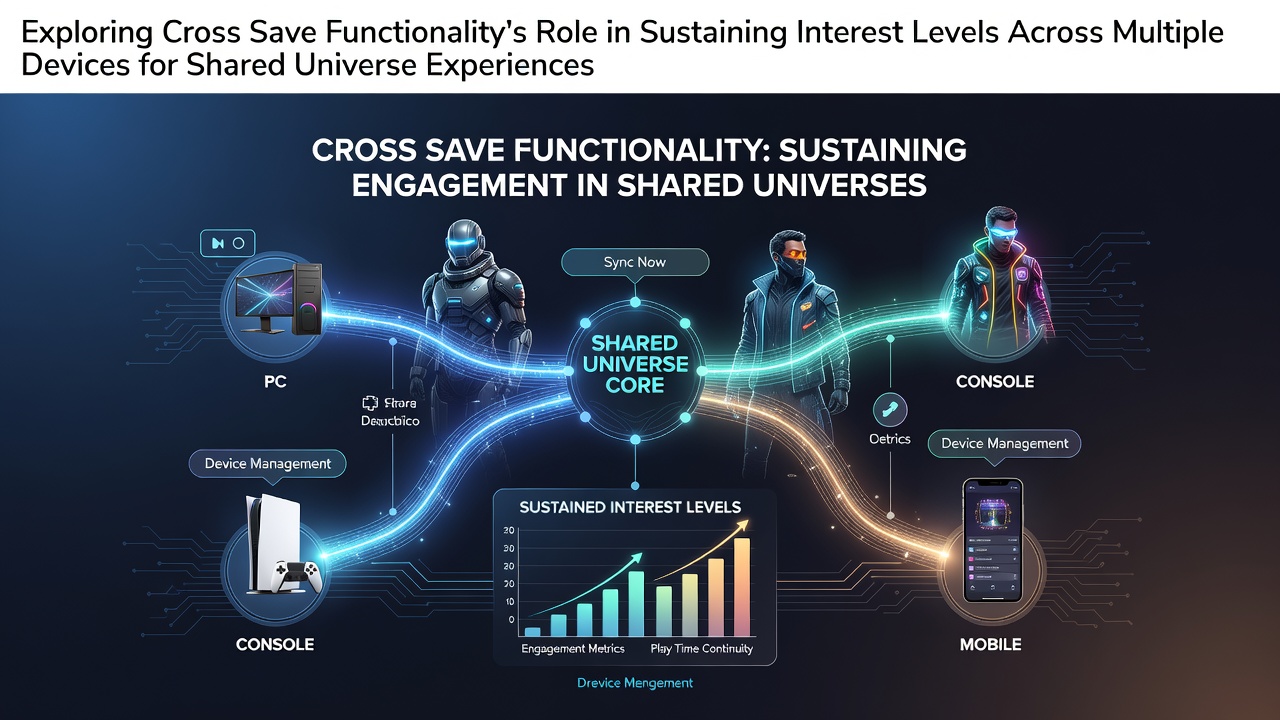
Cross-save functionality enables players to transfer progress, items, and character data between different hardware platforms without interruption, and this capability has become central to how shared universe experiences maintain engagement over extended periods. Developers integrate cloud-based synchronization systems that update in real time, allowing seamless transitions from consoles to handheld devices or personal computers while preserving narrative continuity and resource accumulation in interconnected game worlds.
Core Technical Implementation
Shared universes such as those found in multiplayer titles with persistent worlds rely on centralized servers to handle save data, and cross-save tools connect these servers to multiple client types through standardized APIs. Research from industry reports shows that synchronization occurs via encrypted cloud storage, with conflict resolution protocols that prioritize the most recent updates when players switch devices mid-session. Data from the Entertainment Software Association indicates that by early 2026 adoption rates for these systems had risen across major platforms, particularly in titles supporting cross-platform play.
Sustaining Long-Term Interest Through Device Flexibility
Players often begin sessions on one device and continue on another due to location or time constraints, yet cross-save prevents loss of momentum in storylines or competitive rankings. Studies conducted by academic institutions in Canada have documented how this continuity correlates with higher session frequencies, as individuals avoid restarting from earlier points and instead build upon accumulated achievements. In shared universes, where events and updates affect all participants simultaneously, the ability to participate regardless of hardware choice keeps communities active during seasonal cycles and collaborative challenges.
Patterns Observed in Multi-Device Usage
Figures from European gaming associations reveal that users who activate cross-save options demonstrate extended play durations compared to those limited to single-platform accounts, especially in environments where narrative elements span multiple entries. Mobile integration plays a notable role here, since short sessions on portable devices feed into longer console experiences without resetting progress markers. Observers note that this layered access reduces abandonment rates during periods of hardware transition, such as when new consoles launch or when players acquire additional devices.
Case Examples from Major Titles
One prominent shared universe series introduced cross-save in 2024, and subsequent tracking showed that participant numbers remained stable through multiple content drops into June 2026. Another example involves a live-service game where character customizations and quest completions carried over between PC and console versions, resulting in coordinated community events that drew consistent involvement across regions. Researchers at Australian universities have analyzed similar implementations and found that retention metrics improved when synchronization covered not only saves but also in-game currencies and social features.

Data Trends Through Mid-2026
Industry analyses compiled by research firms indicate that titles offering robust cross-save support experienced steadier interest curves during off-peak months, with device-switching contributing to daily active user stability. A report released in spring 2026 highlighted how shared universe properties benefited most, since interconnected storylines reward ongoing participation rather than isolated play sessions. Those who examined platform telemetry observed that cross-save activation often preceded spikes in cross-device logins, particularly among users managing multiple accounts or family-shared libraries.
Integration with Broader Accessibility Measures
Cross-save systems frequently pair with account-linking services that also support accessibility options like adjustable control schemes or visual aids, and this combination allows wider audiences to maintain involvement without hardware limitations creating barriers. Government-affiliated technology reviews from the European Union have noted the role these features play in extending game lifespans, as they accommodate varied play environments from stationary setups to on-the-go scenarios. Evidence suggests that when synchronization covers progress tied to community milestones, participation in shared events persists at higher levels across demographic groups.
Conclusion
Cross-save functionality continues to shape how shared universe games sustain engagement by removing device-based interruptions to player progress. As of June 2026, available data shows consistent patterns of prolonged interest when synchronization operates reliably across platforms, supporting the interconnected nature of these experiences through flexible access methods. Continued refinement of these tools aligns with expanding hardware ecosystems and evolving player habits.