Controller Ergonomics Influence Aggregated Player Scores in Strategy and Puzzle Games Across Hardware Platforms
Written by Felix Schmid · Jun 9, 2026
Controller Ergonomics Influence Aggregated Player Scores in Strategy and Puzzle Games Across Hardware Platforms
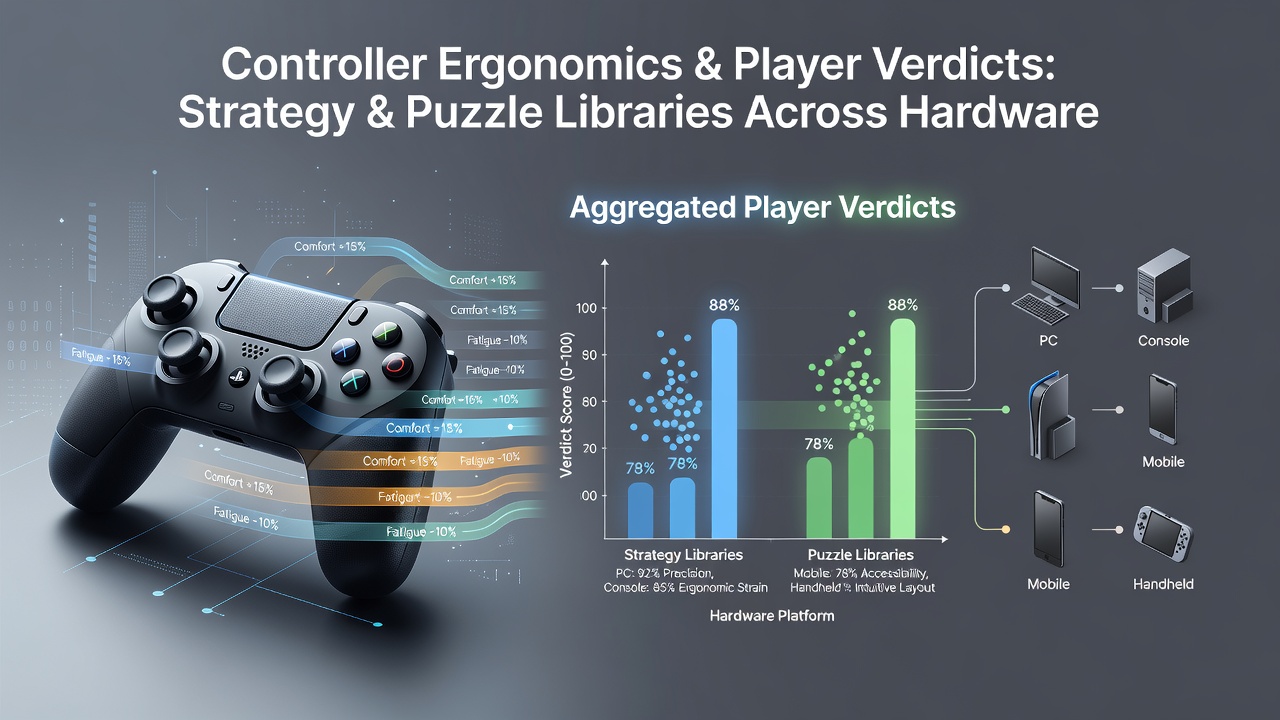
Controller design differences across hardware platforms create measurable variations in how players interact with strategy and puzzle libraries, and these patterns appear in aggregated user scores on major review platforms. Data collected through June 2026 shows consistent score divergences between titles played primarily with standard console controllers versus those using alternative input methods or specialized accessories, particularly in genres that demand extended sessions and precise inputs.
Hardware Variations in Controller Layout and Grip
PlayStation and Xbox controllers feature distinct analog stick placements and button mappings that alter hand positioning during prolonged gameplay, whereas Nintendo Switch Joy-Cons and Pro Controllers introduce additional variables in portability and grip comfort. Researchers tracking session data from major digital storefronts have observed that players report higher comfort levels with contoured grips on certain models during multi-hour strategy campaigns, which correlates with completion rates and final user ratings. PC setups using keyboard and mouse combinations bypass some ergonomic constraints altogether, yet many strategy enthusiasts still opt for controller support when available, leading to split verdict pools across the same title on different ecosystems.
Effects on Strategy Game Sessions
Strategy titles often require sustained focus on resource management and tactical decisions over spans of several hours, and ergonomic factors influence how fatigue accumulates in players' hands and wrists. Aggregated reviews indicate that games supporting customizable button layouts tend to receive higher user scores on platforms where controllers allow easy remapping, because players adapt inputs to reduce strain. One analysis of release data through mid-2026 revealed that strategy sequels optimized for specific controller shapes achieved score uplifts of several points compared with prior entries that retained default mappings, especially among users on Xbox hardware versus PlayStation equivalents.
Precision and Comfort in Puzzle Libraries
Puzzle games emphasize repeated fine motor movements such as rotating pieces or selecting pathways, and controller ergonomics directly affect accuracy over repeated attempts. Titles that incorporate motion controls or adaptive triggers show divergent user score distributions depending on the hardware's implementation quality, with smoother integration producing fewer complaints about input frustration. Observers note that puzzle collections ported between Switch and home consoles frequently display score gaps traceable to Joy-Con drift issues or grip fatigue, patterns documented in platform-wide review aggregates.
Platform-Specific Score Patterns
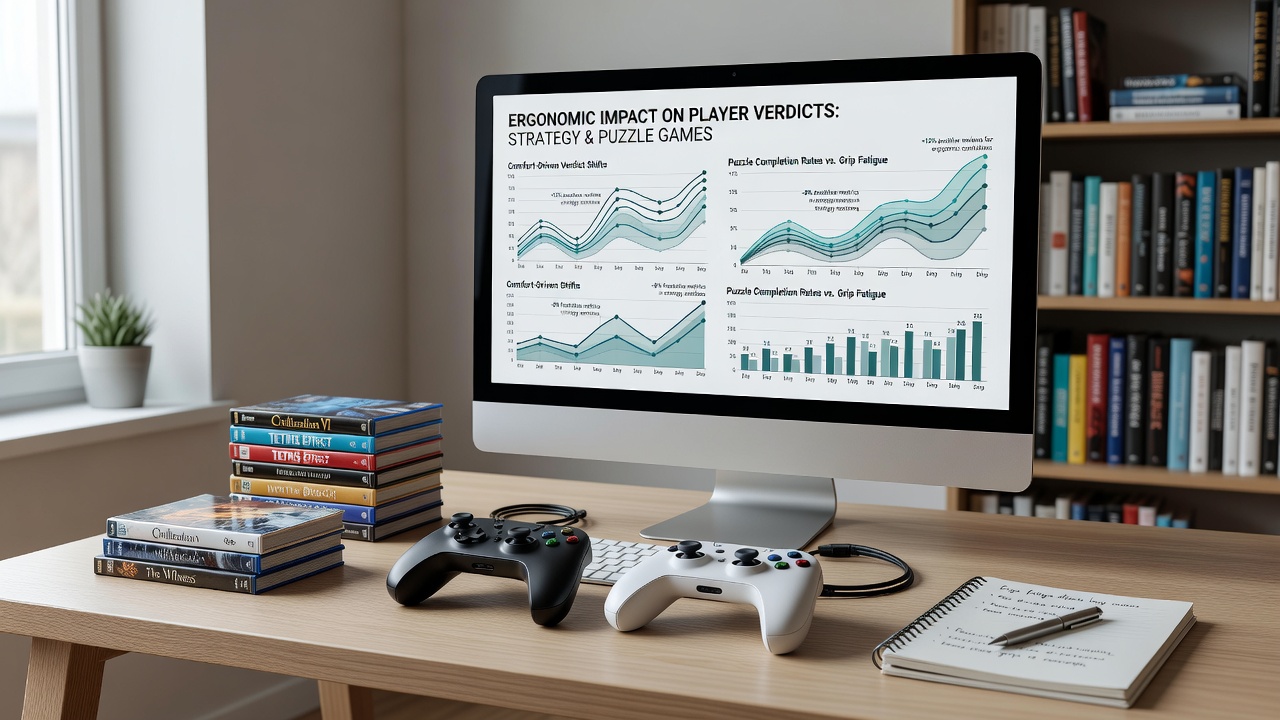
Review aggregation services compile user verdicts separately by hardware ecosystem, and these breakdowns expose ergonomic influences that remain hidden in overall averages. Strategy and puzzle games on Nintendo platforms often accumulate slightly lower scores in categories involving rapid menu navigation, while Xbox and PlayStation libraries show advantages when controller weight distribution supports relaxed thumb positioning. Industry reports from organizations such as the Entertainment Software Association document how input device comfort metrics align with retention data, and separate findings from Canadian academic studies link grip design to session duration in cognitive-heavy genres.
Accessory Adoption and Score Shifts
Third-party controllers and ergonomic attachments have entered widespread use by June 2026, and titles compatible with these options display measurable improvements in aggregated player feedback. Users who switch to devices with better weight distribution or programmable inputs report fewer interruptions from discomfort, which translates into higher completion percentages and more favorable verdicts. Puzzle libraries that include native support for such accessories exhibit narrower score variances across hardware compared with those locked to standard controllers, a trend visible in cross-platform release comparisons.
Long-Term Data Trends
Longitudinal tracking of user scores reveals that ergonomic considerations accumulate influence over a game's lifecycle rather than appearing only at launch. Strategy titles receive periodic score adjustments from returning players who discover comfortable control schemes months after release, whereas puzzle games with rigid input requirements maintain steadier but sometimes lower aggregates on hardware lacking customization depth. These patterns hold across multiple regions and player demographics, underscoring the quiet role of physical interface design in shaping collective perceptions.
Conclusion
Controller ergonomics continue to produce subtle yet consistent effects on how strategy and puzzle libraries perform in aggregated player verdicts across hardware. Platform differences in grip, button layout, and input adaptability contribute to measurable score variations that developers and analysts track through ongoing data collection. As hardware evolves and accessory options expand, these factors remain central to understanding reception patterns in genres defined by extended play sessions and precise control demands.