Charting Collectible Milestones and Their Ties to Retention Curves in Digital Play Experiences
Written by Zara Foster · May 31, 2026
Charting Collectible Milestones and Their Ties to Retention Curves in Digital Play Experiences
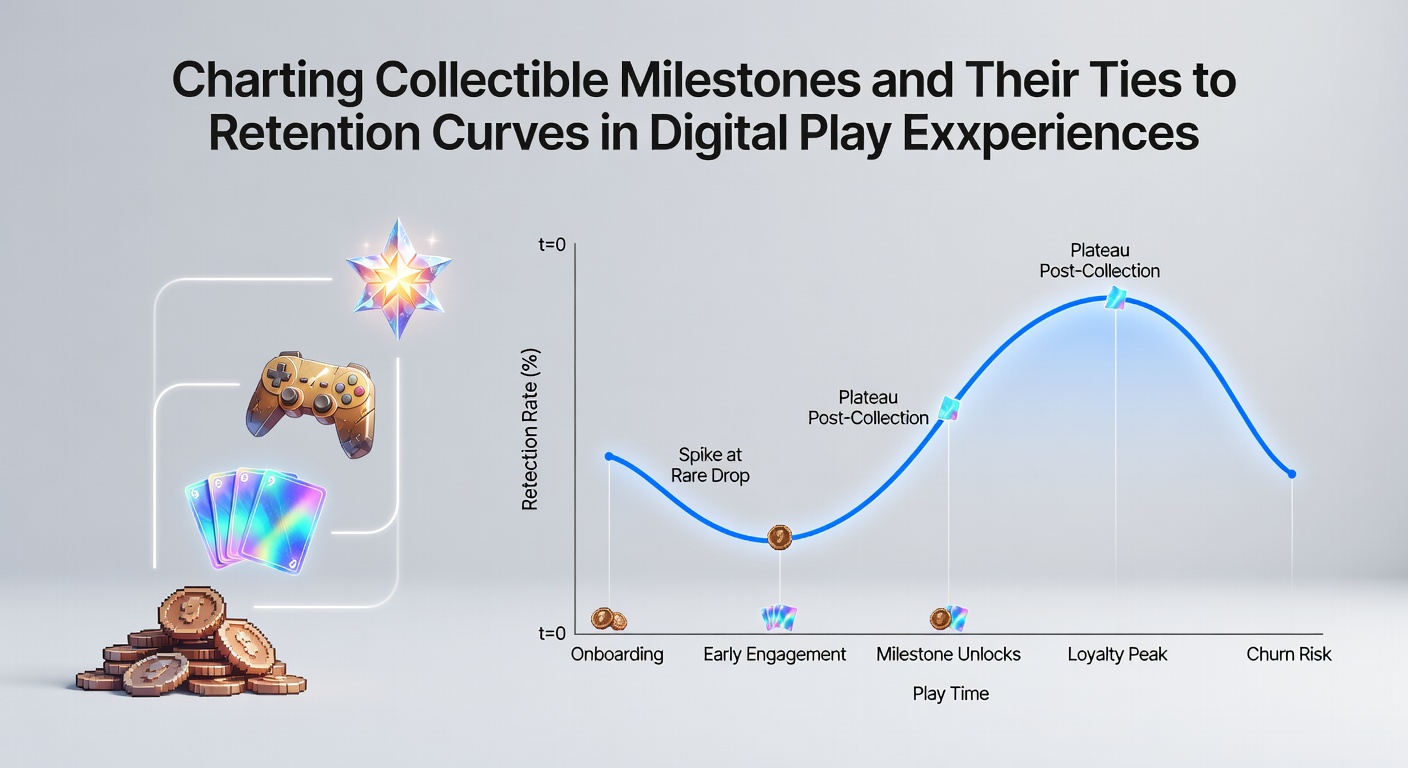
Collectible milestones appear throughout digital play experiences as structured goals that players pursue alongside core gameplay loops, and industry data links these elements directly to measurable shifts in retention curves. Researchers track retention as the percentage of players who return on specific days after initial download or purchase, often charting patterns across the first week, month, and beyond. According to reports from the Entertainment Software Association, games incorporating layered collectible systems show distinct plateaus in those curves where drop-off rates slow compared to titles without such features.
Defining Collectible Milestones in Practice
Collectible milestones take forms like achievement badges, hidden item sets, or progression markers that unlock cosmetic rewards or narrative branches, and developers integrate them into both single-player campaigns and live-service environments. Data from multiple platform analytics firms reveal that players who complete at least one milestone within the first three sessions demonstrate higher return rates on day seven. These markers function as progress anchors, giving players concrete reference points that encourage repeated logins without altering the fundamental mechanics of the experience itself.
Retention Curves and Milestone Timing
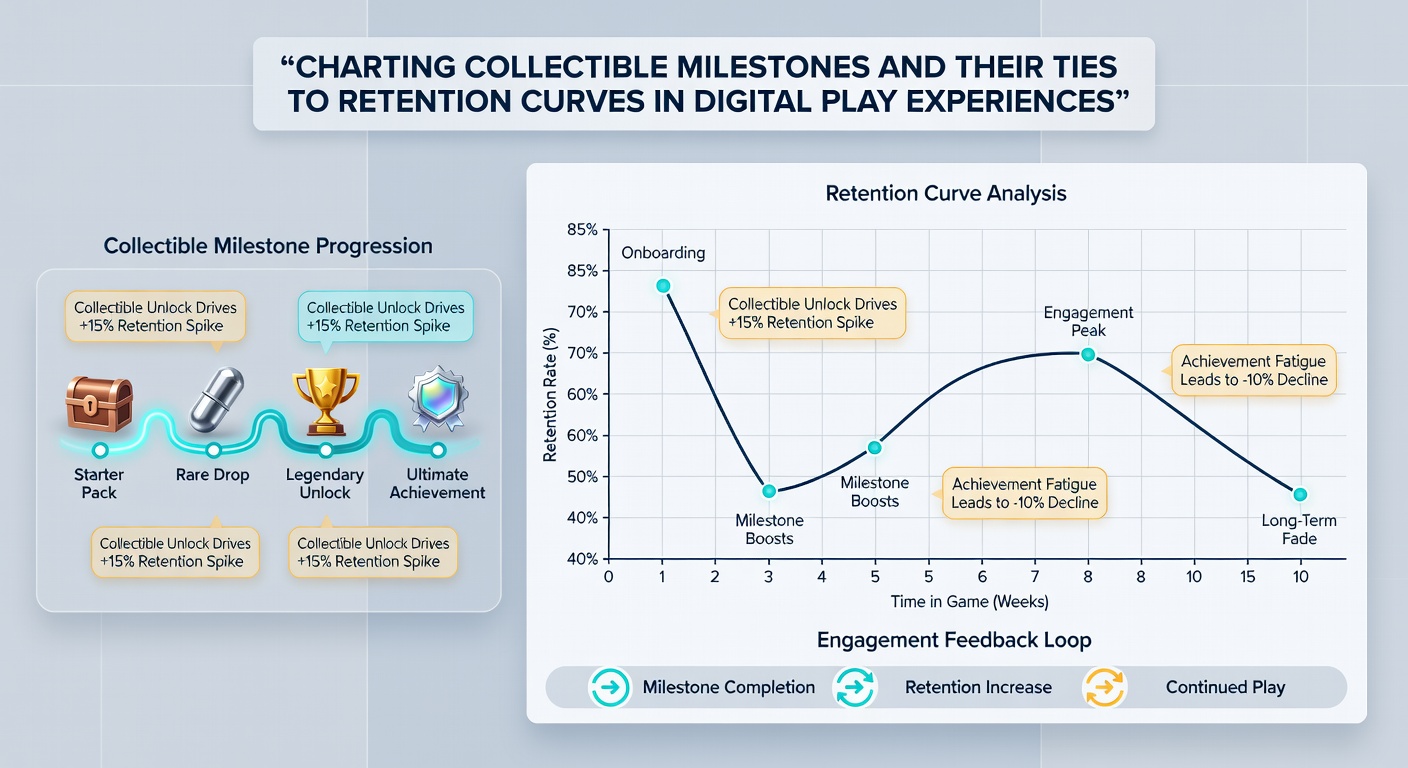
Retention curves typically follow a steep initial decline that flattens as engaged players form habits, yet studies indicate that strategically placed collectible milestones can create secondary bumps in activity. For instance, when milestones require three to five hours of play to unlock, corresponding data sets show reduced churn during that window. Observers note that early milestones, completed within the first hour, correlate with improved day-two retention figures, while later ones sustain longer-term engagement through the first thirty days.
Patterns Observed Across Genres
Action-adventure titles and role-playing games frequently embed collectible systems that tie into exploration incentives, and aggregated platform statistics demonstrate that these implementations produce retention curves with shallower slopes after the first week. In contrast, competitive multiplayer experiences use milestone tracking through seasonal challenges, where completion rates align with spikes in daily active users during event periods. Figures from industry tracking services indicate that games releasing milestone updates in May 2026 recorded measurable upticks in thirty-day retention when those updates coincided with existing player progression paths rather than introducing entirely separate systems.
What's interesting here involves how milestone density affects curve shape, because titles that space collectibles evenly across playtime avoid the sharp drops seen in games that cluster rewards too early or too late. Researchers have mapped these distributions across thousands of titles, finding consistent associations between milestone cadence and sustained player return rates.
Data Sources and Measurement Approaches
Platform holders and third-party analytics providers collect retention metrics through anonymized account activity, then cross-reference them against milestone completion logs. Reports compiled by the Interactive Software Federation of Europe highlight regional variations where European markets show stronger ties between narrative-linked collectibles and month-one retention compared to other territories. Academic analyses from research institutions further break down these connections by examining variables such as milestone difficulty and reward visibility, revealing that transparent progress tracking tends to extend the tail of retention curves more reliably than hidden or randomized elements.
Live Service Implementations and Ongoing Tracking
Live service models update collectible milestones through seasonal content drops, and telemetry from these environments shows that new milestone introductions can temporarily lift retention curves even for players who had previously reduced their play frequency. Developers monitor completion velocity to adjust difficulty or visibility, because rapid or stalled progress both influence how long cohorts remain active. Data sets covering titles active through spring 2026 demonstrate that iterative milestone refinement correlates with steadier retention across quarterly measurement periods.
Those who've examined large-scale player databases note that social sharing of milestone achievements adds another layer, as community visibility often prompts additional sessions from connected accounts. This effect appears most pronounced when milestones include shareable artifacts or comparative leaderboards that extend engagement beyond solo progression.
Conclusion
Collectible milestones connect to retention curves through measurable patterns in completion timing, density, and reward structure, with industry reports and platform analytics consistently documenting these relationships across diverse game types. As measurement techniques advance and more titles adopt detailed tracking, the associations between specific milestone designs and retention outcomes continue to inform development decisions. Observers expect further refinement of these connections as data collection expands into additional markets and platforms.