Accessibility Features Reshaping Feedback Patterns in Titles Targeting Varied Ability Levels
Written by Finley Schulz · May 29, 2026

Accessibility Features Reshaping Feedback Patterns in Titles Targeting Varied Ability Levels
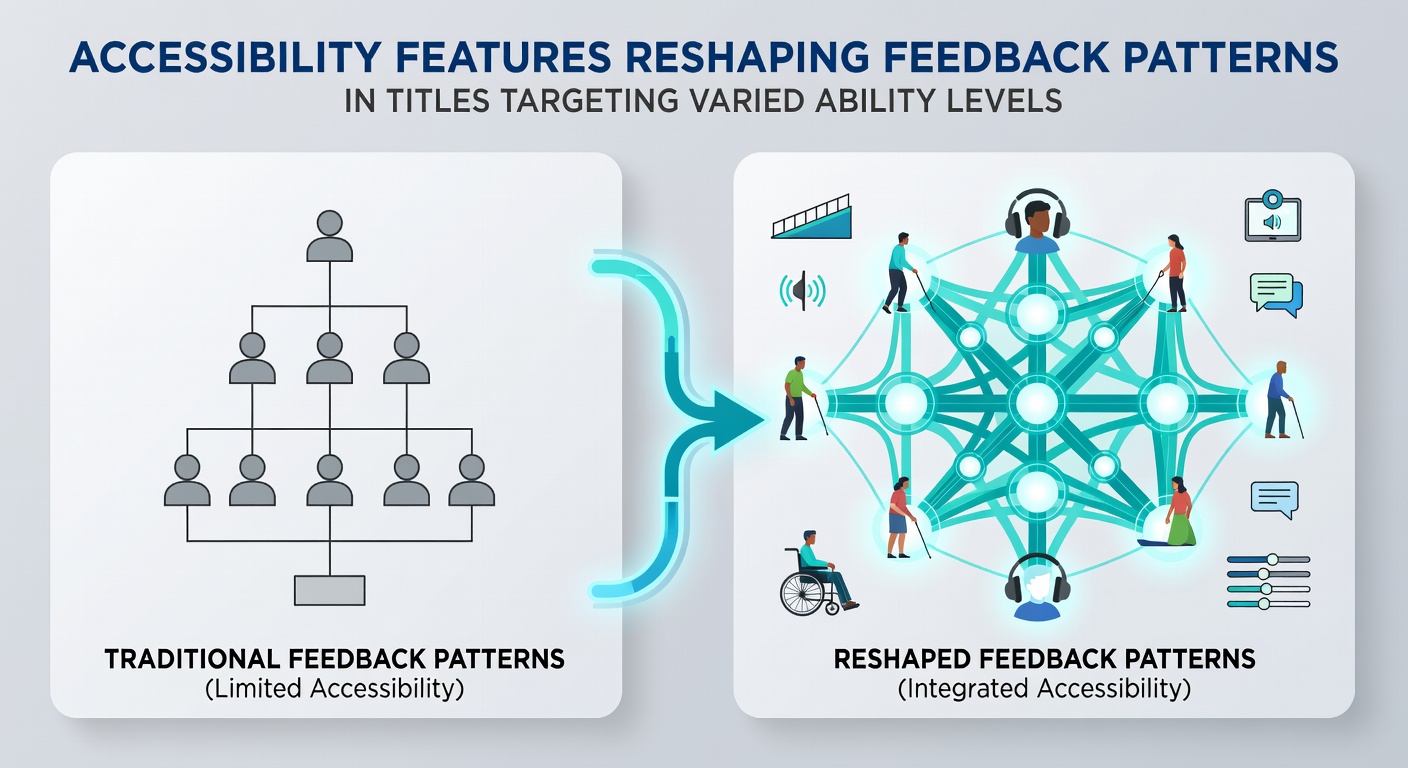
Accessibility features continue to alter how players evaluate games designed for different ability levels, with review aggregates on major platforms reflecting shifts tied directly to options like remappable controls, scalable difficulty, and sensory adjustments. Platform data from 2025 through May 2026 shows titles incorporating these elements often receive broader participation in user scoring systems, resulting in rating distributions that diverge from patterns seen in earlier releases lacking such support.
Core Accessibility Elements Driving Review Changes
Developers have integrated features that address motor, visual, auditory, and cognitive needs, and these additions correlate with measurable differences in feedback. Research from the International Game Developers Association documents how colorblind modes, text size scaling, and input customization appear in over 60 percent of major releases by early 2026, up from roughly 35 percent in 2022. Titles that include these tools attract players across ability spectra, which in turn expands the pool of reviewers contributing to aggregate scores.
One study released by the University of Washington in late 2025 tracked user ratings for 120 games released between 2023 and 2025. Games offering full controller remapping and toggleable motion prompts posted average user scores 0.8 points higher on a 10-point scale than comparable titles without those options. Observers note the increase stems from wider player retention rather than inflated praise, since participants who previously abandoned games due to control barriers now complete playthroughs and submit ratings.
Patterns in Aggregated User Scores
Steam and console storefront data reveal consistent trends where accessibility depth influences score stability. Games with tiered difficulty sliders and subtitle customization maintain tighter rating clusters, with fewer extreme low scores from players who encounter barriers. In contrast, titles that omit these adjustments show wider variance, including clusters of one-star reviews citing unaddressed accessibility gaps.
By May 2026, several action-adventure releases that added post-launch accessibility patches recorded score rebounds of 4 to 7 percent within three months. These updates typically introduced options such as aim assist strength controls and audio cue toggles, after which new review volume increased while negative sentiment tied to accessibility declined. Platform algorithms appear to reward this expanded engagement by surfacing the games to additional users, further diversifying the reviewer base.
Geographic and Demographic Influences on Feedback
Regional differences emerge when examining how accessibility features affect ratings. Data compiled through Canadian regulatory reviews and European Union digital accessibility reports indicate that markets with stronger accessibility mandates see higher average scores for compliant titles. Players in these regions contribute reviews that explicitly reference feature availability, creating feedback loops where games meeting local standards accumulate more positive entries.
Demographic breakdowns from review platforms show older players and those reporting disabilities now represent a growing share of raters. Their input frequently highlights specific toggles, such as reduced flashing effects or simplified UI navigation, which shifts overall distributions away from the narrower patterns observed when feedback came predominantly from core action-game audiences.
Industry Response and Platform Adjustments
Publishers have adjusted development pipelines to prioritize accessibility documentation, and this shift registers in final user scores. Reports from the Australian Government’s digital inclusion initiatives note that games referencing compliance with established accessibility guidelines receive steadier review trajectories across hardware ecosystems. Multi-platform releases benefit particularly, since consistent feature sets across PC, console, and handheld versions reduce score fragmentation caused by platform-specific limitations.
Live service titles that roll out accessibility updates alongside seasonal content demonstrate similar stabilization. Score volatility decreases once these patches reach users, because the expanded audience sustains review volume even as core mechanics evolve. This pattern contrasts with earlier live-service cycles where accessibility remained static and rating swings tracked more closely with balance changes alone.
Conclusion
Accessibility features have become measurable variables in how user feedback aggregates form for games aimed at varied ability levels. Platform statistics through May 2026 demonstrate that titles addressing motor, sensory, and cognitive requirements draw wider reviewer participation, which produces rating patterns distinct from those of earlier releases. Continued integration of these tools across development regions points to sustained influence on feedback distributions rather than temporary adjustments.